
Chiang Mai in a nutshell
If you are preparing a trip to Thailand, here is the complete Chiang Mai guide. There is a high chance that Chiang Mai is already on your list. And honestly, that's understandable.
While Bangkok impressed by its energy and that the South Islands entice with their beaches, Chiang Mai offers a totally different experience. Here, The pace is slowing down. Mountains replace skyscrapers, cafes nestled in nature take the place of large shopping centres, and the traditions of northern Thailand remain very present in everyday life.
That's what makes it all, by the way. the charm of this city.
Situated about 700 kilometres north of Bangkok, Chiang Mai is the secondMe Plus Big city from Thailand. The former capital of the Lanna Kingdom, it possesses a strong cultural identity that can be found in its architecture, cuisine, markets, and even in the way the inhabitants welcome visitors.
What surprised often on a first visit, it's Balance that the town has managed to preserve. You can find all the necessary modern comforts there for Voyager easily: cafés, hotels, co-working spaces, shopping centres and quality infrastructure. Yet, just a few minutes are enough to find yourself surrounded by rice paddies, mountains or small villages where time seems to have stood still.
Où se situe Chiang Mai ?
Chiang Mai se trouve dans the North from Thailand, surrounded by mountains and forests. The city is located in About an hour By plane from Bangkok and it is the ideal starting point for exploring the entire northern region of the country.
Thanks to its geographical position, Chiang Mai enjoys a more pleasant climate that southern Thailand experiences for much of the year. Mornings can even be cool between November and February, which often surprises travellers accustomed to tropical heat.
Pourquoi Chiang Mai attire autant de voyageurs ?
Each traveller finds a different reason to love Chiang Mai.
Some come for the temples and history. Others for the nature, waterfalls, and mountains. Many also appreciate the relaxed atmosphere in the city, which is very different from Bangkok.
Chiang Mai also attracts many long-term travellers, retirees, families and remote workers thanks to its affordable cost of living and its quality of life particularly pleasant.
But in my opinion, the real strength of Chiang Mai lies elsewhere.
The city still allows you to discover a Thailand more authentic. A Thailand where you take the time to chat with the locals, stop at a small café tucked away in the mountains, or spend a day in a village far from the main tourist trails.
Climate and seasons
Chiang Mai has three main seasons:
- The cool season from November to February.
- The warm season from March to May.
- The rainy season is from June to October.
The most pleasant period to discover the region is generally located enter November and February, when the temperatures are milder and the sky is often clear.
We will go into more detail on each season in the next chapter to help you choose the best time for your trip.
How many days to allow?
Many travellers spend only two or three days in Chiang Mai.
In my opinion, it's insufficient.
To discover the main temples, enjoy the markets, visit some iconic cafes and explore the surrounding area, I would recommend a minimum of five days.
If you love nature, mountains, or local experiences, a full week allows you to make the most of everything the region has to offer.
What budget should I plan for?
Chiang Mai remains one of the most affordable destinations in Thailand.
With a reasonable budget, it is possible to to take advantage of accommodation comfortable, to eat well and to participate in several activities.
By travelling simply, some travellers manage on less than €30 per day. Conversely, charming hotels, mountain resorts and certain high-end experiences also allow for a more comfortable stay without reaching the prices found in other tourist destinations in the country.
A full chapter will be dedicated to the budget further on in this guide.
Chiang Mai or Bangkok?
This is probably one of the questions I get asked most often.
If you're looking for a buzz, large shopping centres, rooftops and urban life, Bangkok will probably be more suitable.
However, if you prefer nature, mountains, charming cafés and a more relaxed atmosphere, Chiang Mai is likely to quickly win your heart.
Personally, while I enjoy returning to Bangkok from time to time, Chiang Mai offers in my opinion a quality of life and a much more pleasant atmosphere in which to take the time to discover Thailand.
Chiang Mai or Phuket?
These two destinations ultimately don't have much in common.
Phuket is a seaside destination focused on the sea, beaches, and water sports.
Chiang Mai, on discovers it through its mountains, its culture, its villages and its gastronomy.
If your dream is to spend your days on the sand, Phuket will be more suitable. If you are looking a cultural immersion and mountain scenery, Chiang Mai wins hands down.
Chiang Mai or Koh Samui?
Koh Samui primarily attracts travellers seeking paradise beaches, resorts, and an island vibe.
Chiang Mai will appeal more Nature lovers, hiking, of culture and authenticity.
Ideally, the two destinations complement each other. Many travellers choose to combine a few days in Chiang Mai with a stay on the southern islands.
My opinion after several years in Thailand
After several years spent in Thailand, Chiang Mai remains one of the cities I recommend the most.
Not just for its temples or its landscapes.
But because it offers something that is increasingly difficult to find: a balance between comfort, authenticity and a gentle way of life.
Whether you're coming for a few days or several weeks, Chiang Mai is one of those places that people often visit... and where‘one ends up wanting stay a little longer than planned.
2. How to get to Chiang Mai?
Good news: travelling to Chiang Mai is very easy.
Whether you're arriving from Bangkok, the south of Thailand, or directly from abroad, several options are available to you. The best choice will largely depend on your budget, of the time you have available and the type of experience you are looking for.
Having tried several ways to travel around Thailand, here is a comprehensive overview of the different options.
By plane from Bangkok
It's by far the quickest and most used option.
Every day, dozens of flights connect Bangkok with Chiang Mai. Low-cost airlines regularly offer very attractive fares, especially if you book a few weeks in advance.
Travel time
- Duration: Approximately 1h15
- Total time including the airport: 3 to 4 hours
Advantages
- Quick
- Often economical
- Several departures per day
- Ideal for short stays
Disadvantages
- Less charm than the train
- Airport formalities waiting time
My opinion
If you're short on time, I clearly recommend the plane. The prices are often very reasonable And enjoy your stay.
From Bangkok by train
The train remains one of travellers' most popular experiences.
The journey gradually crosses the plains of central Thailand before arriving in the mountainous landscapes of the north.
Travel time
- Between 10 am and 2 pm depending on the train
The different classes
- Single seats
- Air-conditioned couchettes
- More comfortable cabins
Advantages
- Authentic experience
- Pleasant landscapes
- Overnight trip practical
Disadvantages
- Longer
- Possible delays
My opinion
If it's your first trip to Thailand and you have some time, The night train is an experience to be had at least once.
From Bangkok by bus
The bus is often the cheapest option.
Several companies operate the route between Bangkok and Chiang Mai daily.
Travel time
- Between 9 AM and 12 PM
Advantages
- Economic
- Numerous departures
Disadvantages
- Less comfortable
- Little freedom of movement
- Journey sometimes tiring
My opinion
I only choose this option when the The budget is very tight. Between the bus and the night train, I much prefer the train.
From Phuket
Many travellers wish to combine the southern beaches with the northern mountains.
Recommended option
- Direct flight Phuket → Chiang Mai
Travel time
- Around 2 hours
Alternative
- Bus or train via Bangkok
But honestly, unless you want to explore the country bit by bit, The plane remains the most practical solution.
From Koh Samui
If you're travelling in the Gulf of Thailand, several options exist.
Quickest option
- Direct flight to Chiang Mai (season permitting)
Budget option
- Ferry to the mainland
- Bus or train to Bangkok
- Are there any connections to Chiang Mai?
My opinion
To save time and enjoy your trip more, Flying usually remains the best option.
From Chiang Rai
Many travellers visit Chiang Mai and Chiang Rai on the same trip.
A bus
- Around 3 to 4 hours
By car
- Around 3 hours
My opinion
The journey is easy and pleasant. It makes for an excellent excursion or a logical stop on a northern Thailand itinerary.
From abroad
Chiang Mai International Airport receives several international flights, including from:
- Singapore
- Kuala Lumpur
- Seoul
- Taipei
- Hong Kong
- Some Chinese cities
However, many travellers still transit through Bangkok before heading to Chiang Mai.
Arrival at Chiang Mai Airport
One of the great advantages of Chiang Mai is the proximity of its airport.
Unlike many other destinations, you can reach the city centre in just a few minutes.
Average time to the centre
- Between 10 and 20 minutes
Transport Solutions
- Grab
- Bolt
- Taxi
- Red songthaew
The prices remain generally very reasonable.
Which option to choose according to your budget?
Small budget
- Night bus
- Single sleeper night train
Mid-range budget
- Air-conditioned couchette train
- Flight booked in advance
Maximum comfort
- Direct flight
- Private transfer to the hotel
My personal opinion
If I were to Recommend a single solution For someone discovering Thailand for the first time, I would choose the plane.
The time saved will allow you to enjoy the temples, mountains and villages around Chiang Mai even more.
On the other hand, if you wish to have a more authentic experience and that your journey is not limited by time, the night train remains an excellent travel memory.
Whatever the option chosen, one thing is certain: arriving in Chiang Mai often marks the start of a part of the trip that many travellers remember most fondly.
3. When to go to Chiang Mai?
Choosing the right time to visit Chiang Mai can completely change your experience.
Unlike the southern islands of Thailand, where the focus is mainly on the rainy season, the north of the country possesses its own peculiarities. Cooler temperatures, Mountains, morning mist, Traditional festivals and especially the famous Burning Season strongly influence travel conditions.
The good news is that there's no real bad season to visit Chiang Mai. It simply depends on what you're looking for.
The cool season (November to February)
For many travellers, this is the best time of year.
The temperatures are pleasant, the humidity is low and the sky is often clear. Mornings can even be surprisingly cool, especially in the mountains.
Average temperatures
- Day: 25 to 30°C
- Night: 12 to 20°C
In certain mountainous areas like Doi Inthanon or Chiang Dao, temperatures can drop below 10°C in the early morning.
The benefits
- Dry weather
- Clear sky
- Comfortable temperatures
- Ideal conditions for hiking
- Magnificent landscapes
The disadvantages
- Peak tourist season
- Most requested hotels
- Prices sometimes higher
My opinion
If it's your first trip to Chiang Mai, I'd generally recommend this period.
The warm season (March to May)
This is the hottest time of the year.
Temperatures can get particularly high during the day.
Average temperatures
- 35 to 40°C
- Sometimes more in April
The benefits
- Fewer tourists
- Certains hébergements en promotion
The disadvantages
- Significant heat
- More strenuous outdoor activities
The Songkran Festival
If you travel in April, you might witness Songkran, the Thai New Year.
For several days, the streets transform into Immense giant water battle. Chiang Mai is also considered one of the best cities in the country to celebrate this festival.
The atmosphere is incredible, but prepare to get soaked several times a day.
The Burning Season: what you absolutely need to know
This is probably the most important topic when preparing a trip to Northern Thailand.
Each year, typically between February and April, farmers carry out agricultural burning in various regions of northern Thailand and neighbouring countries.
These fumes can cause a significant deterioration in air quality.
Possible consequences
- Reduced visibility
- Greyish sky
- Significant pollution on certain days
- Views of less spectacular mountains
Should Chiang Mai be avoided?
The answer isn't as simple as you might read on the internet.
Some years are tougher than others. Some weeks are also much more impacted than others.
Personally, if your main objective is to discover mountain landscapes, go hiking and enjoy the viewpoints, I would rather advise you to avoid the period from March to early April.
The rainy season (June to October)
It is a period often underestimated.
Many travellers Imagine spending whole days in the rain, when reality is usually different.
In most cases, the showers arrive in the late afternoon or evening.
The benefits
- Lush nature
- Impressive waterfalls
- Very green landscapes
- Fewer tourists
- More attractive prices
The disadvantages
- Some activities may be disrupted
- Paths sometimes muddy
- Occasional rain
My opinion
This is probably the most underrated season in Chiang Mai.
For nature and photography lovers, the landscapes are often magnificent.
Loy Krathong: One of Thailand's most beautiful festivals
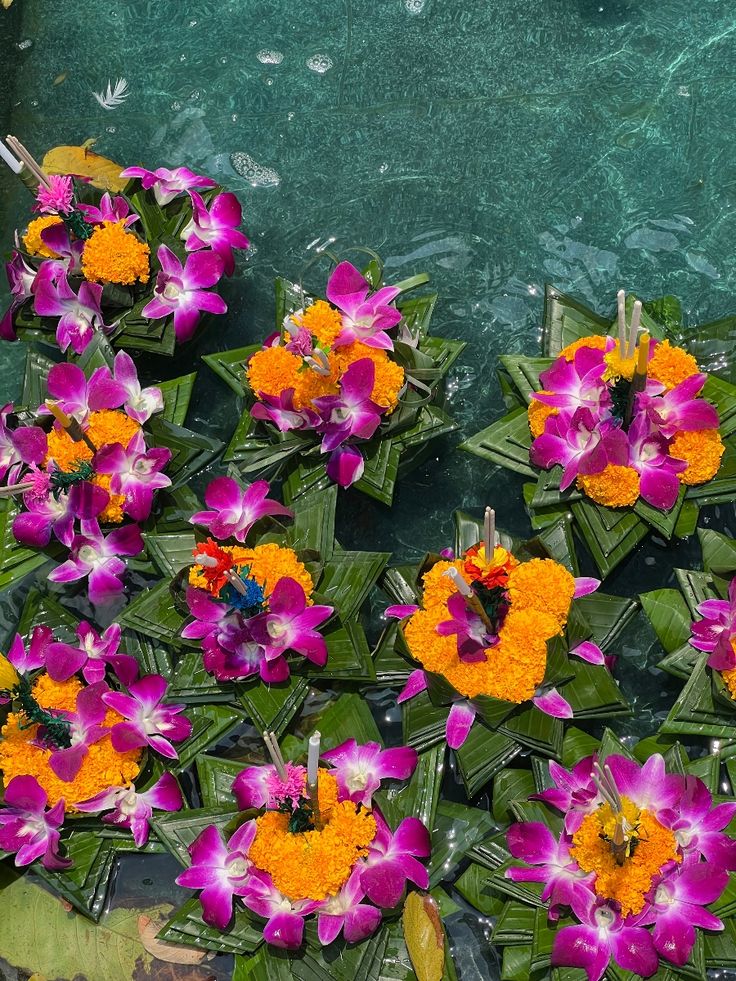
Every year, usually in November, The inhabitants are launching small rafts decorated with flowers. and candles on the rivers.
This tradition symbolises letting go of difficulties and starting a new cycle.
In Chiang Mai, the atmosphere is particularly magical.
The banks are fill with lights and The celebrations attract visitors from all over the world.
Yi Peng: the famous lantern festival
Yi Peng takes place at the same time as Loy Krathong.
It's the event Who founded Chiang Mai famous the world over.
Thousands of lanterns rise into the sky, creating an absolutely unforgettable spectacle.
The images you've probably already seen on social media often come from this festival.
Good to know
Accommodation fills up very quickly during this period.
If you wish to attend Yi Peng, book several months in advance.
La meilleure période pour visiter Chiang Mai est de novembre à février.
It all depends on the type of trip you're looking for.
November to February
Ideal for :
- First discovery
- Hikes
- Mountains
- Photography
June to October
Ideal for :
- Lush green nature
- Cascades
- Lighter budget
- Calmer ambiance
April
Ideal for :
- Songkran
- Festive atmosphere
March to early April
Avoid if:
- Are you sensitive to pollution
- You want to make the most of the scenery
After several years in Thailand
If I had to choose just one period to introduce Chiang Mai to a loved one, I would unhesitatingly choose the period between November and January.
The temperatures are pleasant, the mountains are magnificent and the conditions are ideal for explore the region.
That said, I also have a lot of affection for the rainy season. There are fewer tourists, The landscapes are a brilliant green and some mountain roads become absolutely magnificent.
Ultimately, Chiang Mai can be visited all year round. The most important thing is simply to know the particularities of each season in order to adapt your trip to your desires.
4. Where to stay in Chiang Mai?
Choosing accommodation in Chiang Mai is often more complicated than it appears.
Unlike in Bangkok where the districts are very distinct, Chiang Mai offers several very different atmospheres. within a relatively small area. Depending on whether you're looking for entertainment, culture, nature, peace and quiet, or trendy cafés, some districts will be much more suitable than others.
Here are the main sectors to be aware of before booking.
The Old Town
Surrounded by its old moat and the remains of its ramparts, the Old City is the historic heart of Chiang Mai.
This is generally where travellers who are discovering the city for the first time stay.
Why choose the Old Town?
- Proximity to major temples
- Numerous restaurants and cafés
- Pleasant atmosphere for walking.
- Numerous excursion agencies
- Easily accessible markets
What you need to know
Even though the neighbourhood is touristy, it retains a lot of charm thanks to its shaded alleyways, temples, and small hidden cafés.
Ideal for
- First stay in Chiang Mai
- Travellers without a vehicle
- Short stays
Nimman
Nimman (Nimmanhaemin Road) is often considered as the most modern district of Chiang Mai.
You'll find plenty of designer cafés, co-working spaces, boutiques, international restaurants, and contemporary hotels there.
Why choose Nimman?
- Vibrant neighbourhood
- Numerous cafés and restaurants
- Excellent internet connection
- Modern atmosphere
- Pleasant nightlife
What you need to know
The atmosphere is very different from the Old Town. Here, traditional culture gives way more to an urban and cosmopolitan vibe.
Ideal for
- Digital nomads
- Long stays
- Young travellers
- Coffee lovers
Riverside
Along the Ping River lies one of the most peaceful areas of Chiang Mai.
The atmosphere is more relaxed, and many establishments offer lovely views of the water.
Pourquoi choisir Riverside ?
- Calm ambiance
- Restaurants by the waterfront
- Boutique hotels
- Romantic setting
What you need to know
The neighbourhood is a little further from the main temples but remains easily accessible.
Ideal for
- Couples
- Romantic getaways
- Relaxing stays
Santitham
Long overlooked by tourists, Santitham has become one of the most popular neighbourhoods among expatriates.
Situated between the Old Town and Nimman, it combines local life and proximity to major attractions.
Why choose Santitham?
- Authentic ambiance
- Often more attractive prices
- Local restaurants
- Off the beaten track
What you need to know
It's an excellent compromise for those who wish to discover the daily life of the residents while staying close to points of interest.
Ideal for
- Independent travellers
- Long-term stays
- Small budgets
Night Bazaar
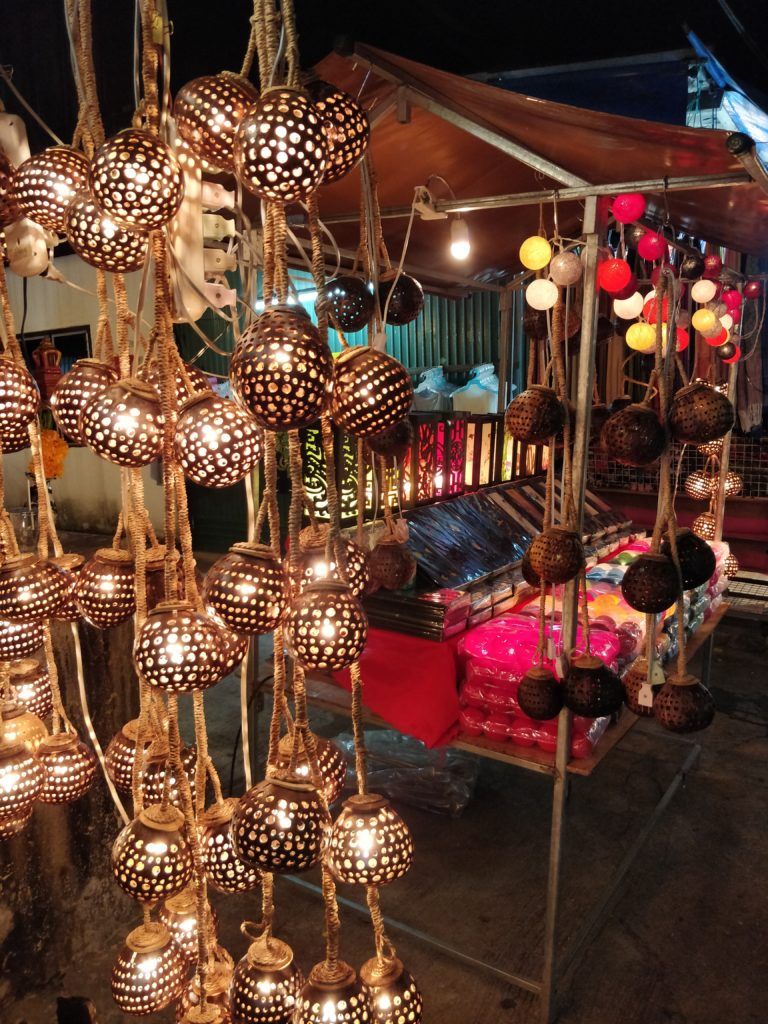
This sector is known for famous night market and its permanent animation.
Why choose this neighbourhood?
- Lively nightlife
- Numerous restaurants
- Markets within walking distance
- Good hotel offer
What you need to know
The neighbourhood can be noisier than other areas.
Ideal for
- Travellers who love animation
- Short stays
- Nightlife
Mae Rim
About twenty kilometres from the city centre, Mae Rim already marks the transition to the mountains.
The region is known for its landscapes, its cafés with a view and its nature-surrounded resorts.
Pourquoi choisir la région de Mae Rim ?
- Ubiquitous nature
- Slightly cooler temperatures
- View of the mountains
- Relaxing atmosphere
What you need to know
A car or scooter is highly recommended.
Ideal for
- Nature lover
- Couples
- Relaxation stays
Doi Saket
Located to the east of Chiang Mai, Doi Saket is still relatively untouched by mass tourism.
You'll find rice paddies, villages, lakes, hidden cafés, and a much more rural atmosphere.
Why choose Doi Saket?
- Calm
- Natural landscapes
- Local atmosphere
- Few tourists
What you need to know
The sector is more suited to travellers who wish to go off the beaten track.
Ideal for
- Long stays
- Car or scooter travellers
- Search for authenticity
Which neighbourhood to choose according to your profile?
For a first visit
The Old Town remains the safe bet.
For cafes and a modern atmosphere
Nimman is probably the best choice.
For peace and quiet and the scenery
Mae Rim and Doi Saket offer a much more natural environment.
For local life
Santitham is an excellent compromise.
For couples
Riverside remains one of the most pleasant neighbourhoods.
Recommended hotels according to your budget
Small budget
Inns and small guesthouses are plentiful in the Old City and Santitham. It's possible to find clean and comfortable rooms without breaking the bank.
Mid-range
Chiang Mai offers excellent value for money. Many hotels have a swimming pool, breakfast, and a good level of comfort for a reasonable price.
Luxury
The region boasts several high-end establishments nestled in the heart of nature or by the river, offering a particularly pleasant experience.
Mountain resorts
For a different experience, some places around Mae Rim, Mon Jam or Chiang Dao offer spectacular views of the northern mountains.
A few tips before booking
- Always check the actual distance to the attractions that interest you.
- If you don't plan on renting a scooter, stick to the Old Town or Nimman.
- Book several months in advance if you are travelling during Yi Peng or Loy Krathong.
- Check recent reviews rather than older ones.
- If you're looking for peace and quiet, avoid accommodation located directly on major tourist routes.
The right neighbourhood can really transform your stay. Fortunately, Chiang Mai remains A city that is easy to get around, which allows you to enjoy the different atmospheres even if you are not staying in the centre.
5. Getting around Chiang Mai
One of the great advantages of Chiang Mai is that it's relatively easy to get around.
The city is much less impressive than Bangkok and the traffic, while sometimes dense at peak hours, is generally more pleasant. Depending on your budget and travel style, several options are available to you.
Get a Bolt
Grab and Bolt are the most used apps in Chiang Mai.
The system works similarly to Uber: you indicate your destination, the price is shown in advance, and a driver comes to pick you up.
Advantages
- Prices known in advance
- No need to negotiate
- Easy payment
- Available almost everywhere
Disadvantages
- Waiting times can sometimes be longer outside the centre.
- Prices that increase during periods of high demand
For the majority of travellers, this is the simplest solution today.
The red Songthaews
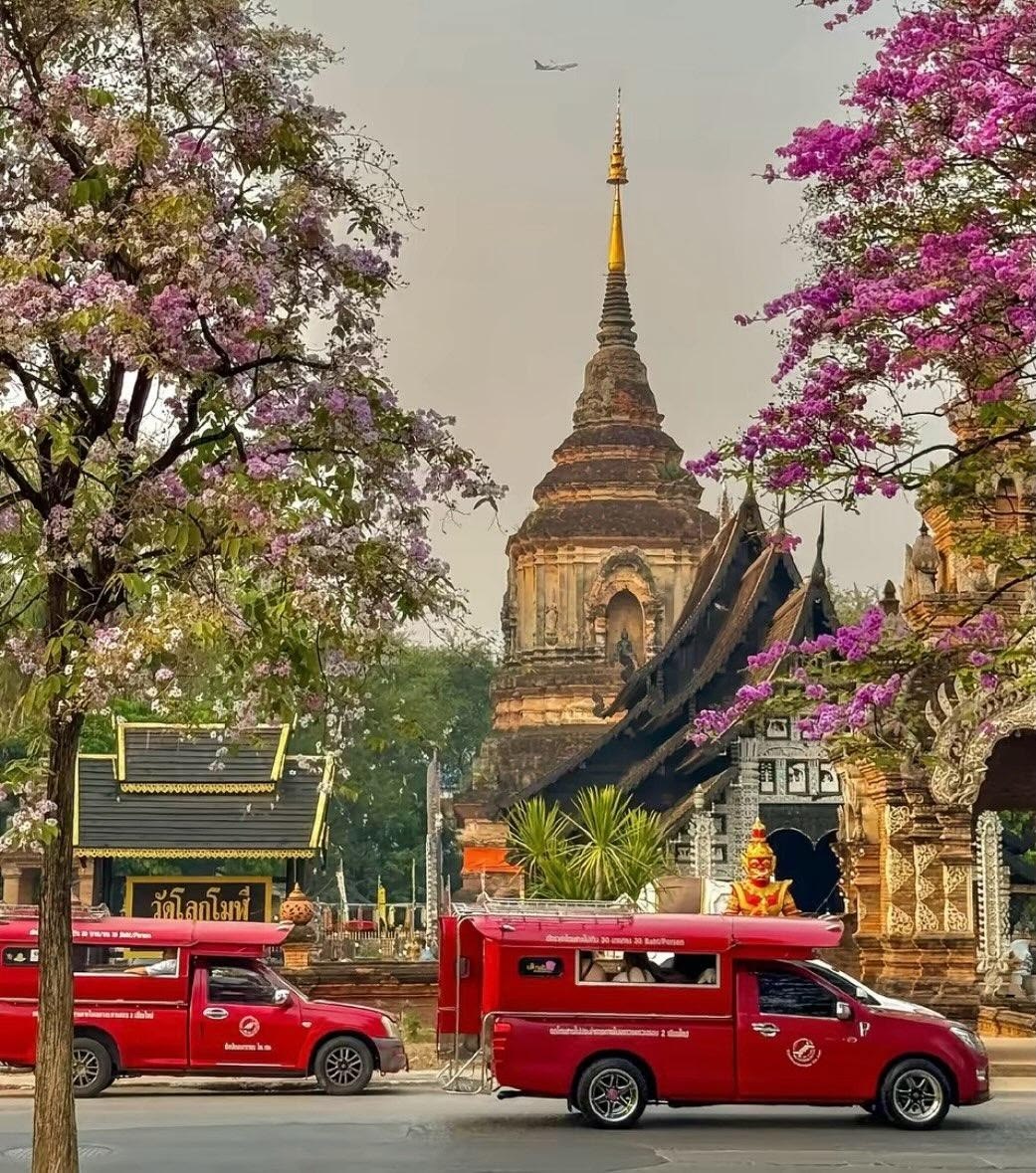
Impossible to visit Chiang Mai without noticing these famous red vans that circulate all over the city.
At the rear, several benches allow passengers to share the journey.
The principle is simple: you tell the driver your destination and they'll let you know if they can take you there.
Advantages
- Very economical
- Local experience
- Present throughout the city
Disadvantages
- Not always straightforward
- Communication sometimes necessary in simple English
Even after several days in Chiang Mai, many travellers continue to use them because they are so convenient.
Tuk-tuks
Tuk-tuks are part of the Thai scenery.
They are easy to find in tourist areas, near temples and markets.
Advantages
- Easy to find
- Typically Thai
- Short-distance practices
Disadvantages
- Often more expensive
- Negotiation required
- Uncomfortable on long journeys
It's an experience worth trying at least once during your stay.
Rent a scooter
For many travellers, The scooter remains the best way to explore Chiang Mai. and its surroundings.
As soon as you leave the city centre to head for the mountains, waterfalls or small villages, the freedom it provides becomes a real advantage.
Advantages
- Total freedom
- Access to less touristy places
- Economic
Disadvantages
- Occasional heavy traffic
- Experience required
- Beware of insurance
The roads that traverse Mae Rim, Mae Kampong or the hills around Doi Saket offer some the most beautiful landscapes in the region.
Rent a car
If you travel as a family or if you wish to explore the surroundings comfortably, The car is an excellent option.
Advantages
- Comfort
- Air conditioning
- Ideal for excursions
- Practice during the rainy season
Disadvantages
- Parking sometimes limited in the centre
- Higher cost
To visit Doi Inthanon, Chiang Dao, or certain mountain villages, a car can quickly become a real plus.
Is it easy to drive in Chiang Mai?
Unlike Bangkok, driving in Chiang Mai remains relatively manageable.
The roads are generally in good condition and the signage is correct.
However, a few rules are worth bearing in mind:
- We drive on the left.
- Traffic can be heavy during peak hours.
- Mountain roads sometimes have many bends.
- Caution is essential during the rainy season.
Distances not to be underestimated
It is an error common in travellers.
On a map, Some places seem close, yet can sometimes require an hour or more to reach.
For example:
- Town Centre → Doi Suthep: approximately 30 minutes
- Town Centre → Mae Kampong: approximately 1h15
- City centre to Mon Jam: approximately 45 minutes
- City Centre → Doi Inthanon : approx. 2 hours
Always take travel times into account when planning your days.
Which mode of transport should I choose?
For a stay of 2 to 4 days
A Bolt is generally sufficient.
To explore the surroundings
The scooter offers the best compromise between freedom and budget.
For families
The car remains the most comfortable solution.
For a local immersion
The red Songthaews are part of the experience.
Once you're there, you'll quickly realise that Chiang Mai can be discovered as much in its temples and mountains as on the small roads that connect its villages. Some of the most beautiful surprises of the trip are found precisely between two planned stages of the itinerary.
6. Chiang Mai's must-see temples
With over 300 temples scattered throughout the city and its surroundings, Chiang Mai is often considered as the cultural capital from Thailand.
Even travellers who aren't particularly interested in Buddhism tend to be won over. Each temple possesses its own atmosphere, history, and architectural peculiarities.
Rather than trying to visit them all, I advise you to focus on a few emblematic sites and take your time discovering them.
Wat Phra That Doi Suthep
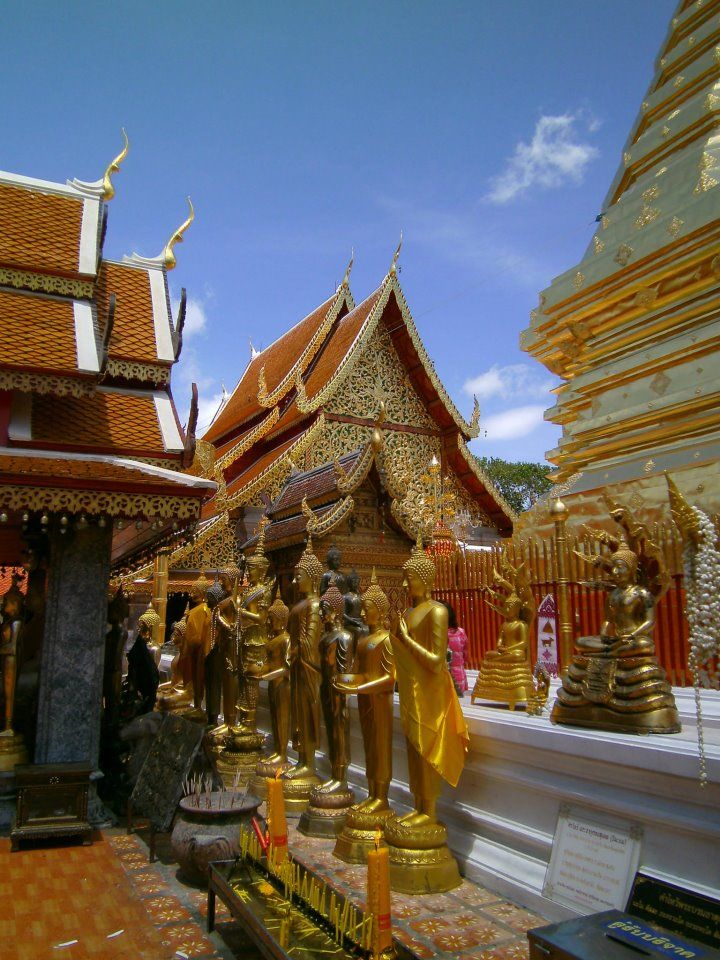
It's impossible to talk about Chiang Mai without mentioning the most famous temple in the region.
Perched on the heights of Mount Doi Suthep, it dominates the entire Chiang Mai valley.
To access it, You must climb an impressive staircase lined with Naga serpents. or use the funicular.
Once you arrive at the summit, the view over the city is magnificent and the golden stupa immediately catches the eye.
Why visit?
- Panoramic view of Chiang Mai
- Iconic temple in northern Thailand
- Unique spiritual atmosphere
- Remarkable architecture
Advice
Arrive early in the morning or late in the afternoon to avoid tourist groups and take advantage of more pleasant light for photos.
Wat Chedi Luang
Located in the heart of the Old Town, This temple is impressive by its immense chedi partially destroyed.
Built in the 14th century, it was once one of the most important religious buildings in the Lanna Kingdom.
Even today, its dimensions remain impressive.
Why visit?
- Major historic monument
- Spectacular architecture
- Easily accessible on foot
To observe
Take your time walking around the chedi. The carved details and the elephant statues are truly worthy of attention.
Wat Phra Singh
Considered as one of the most beautiful temples From Chiang Mai, Wat Phra Singh is an excellent example of traditional Lanna architecture.
The complex is vast, well-maintained, and particularly pleasant to visit.
Why visit?
- Elegant architecture
- Refined decorations
- Historical importance
Particularity
The wooden buildings and overlapping roofs offer some of the finest temple photos in the city.
Wat Umong
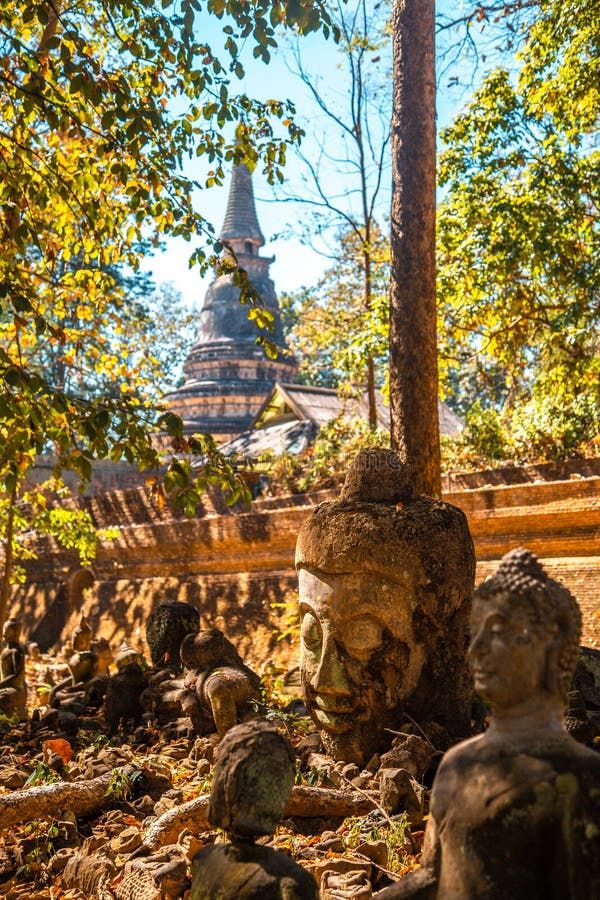
If you are looking for a more peaceful temple, Wat Umong is an excellent alternative.
Situated in a wooded area outside the centre, it has a very different atmosphere from the more frequented temples.
Its peculiarity lies in its old network of tunnels dug under the hill.
Why visit?
- Natural setting
- Infrequently visited
- Historical tunnels
- Meditative ambiance
What makes the place special
The birdsong and the calm around the temple sometimes give the impression of being very far from the city.
Wat Pha Lat
Long considered a well-kept secret, Wat Pha Lat is increasingly well-known today, but it still retains a special atmosphere.
Nestled in the forest between Chiang Mai and Doi Suthep, it quite literally looks like it's sprouted from the jungle.
Stone steps, moss-covered statues, and a small stream create an almost unreal setting.
Why visit?
- Exceptional setting
- Few modern buildings
- Peaceful atmosphere
- Very photogenic
Advice
If you enjoy walking, take the Monk's Trail, a path that connects the town to the temple through the forest.
Wat Suan Dok
Less well-known While the large temples in the city centre are impressive, Wat Suan Dok is still worth a visit.
Its immense golden spire contrasts with the numerous white stupas. which house the ashes of family members Royal Chiang Mai.
Why visit?
- Different architecture
- Calm ambiance
- Magnificent at sunset
Wat Lok Moli
Located near the ramparts of the Old Town, this temple is often overlooked by hurried visitors.
Yet, its imposing brick chedi and wooden buildings are among the most beautiful in Chiang Mai.
Why visit?
- Infrequently visited
- Very beautiful sculptures
- Authentic atmosphere
Rules to be observed in temples
Temples remain above all places of worship.
A few simple rules help show respect towards practitioners:
Dress code
- Shoulders covered
- Knees covered
- Avoid clothes that are too short
Behaviour
- Speak quietly
- Remove your shoes before entering sacred buildings
- Do not touch the Buddha statues
- Respect the ongoing ceremonies
Should you visit a lot of temples?
This is a question many travellers ask themselves.
At the start of a stay, we sometimes want to see them all. However, after a few visits, the temples can start to look the same.
A better approach is often to select five or six very different temples in order to discover several facets of the local culture.
Wat Phra That Doi Suthep for the view, Wat Chedi Luang for the history, Wat Phra Singh for the architecture, Wat Umong for nature, and Wat Pha Lat for its unique atmosphere already make an excellent selection.
A moment not to be missed
If you get the chance to visit a temple first thing in the morning, Do it.
When the tourists haven't arrived yet, the monks are starting their daily activities and the light is still soft, the atmosphere becomes completely different.
It is often at this point that one understands why Chiang Mai is considered one of the most important spiritual centres in Thailand.
7. Chiang Mai's most beautiful viewpoints
Chiang Mai's allure for travellers isn't solely down to its temples or markets. The region is surrounded by mountains, lush valleys, and scenic roads that offer some of the most beautiful landscapes in northern Thailand.
Less than an hour from the city centre, you can find yourself facing seas of clouds, terraced rice fields, or impressive panoramas of the entire valley.
Here are the viewpoints that are truly worth the detour.
Doi Suthep
This is the most famous viewpoint in Chiang Mai.
From the temple heights, the view extends over the entire city, the surrounding mountains, and, on a clear day, as far as the plains of northern Thailand.
Why go?
- Easy to access
- Panoramic view
- Combine cultural visits and scenery
The best time
In the late afternoon, when the light becomes softer and the city begins to light up.
My Jam
Situated in the mountains of Mae Rim, Mon Jam has become one of the favourite destinations for the residents of Chiang Mai.
The region is known for its rolling green hills, flower-filled gardens, cafés with views, and accommodation perched on the heights.
Why go?
- Mountain landscapes
- Pleasant temperatures
- Numerous panoramic cafés
- Spectacular sunrise
What you need to know
The road has several bends but remains easily accessible.
Doi Pui
Often overshadowed by Doi Suthep, Doi Pui is nevertheless well worth a visit.
Located even higher up the mountain, it offers magnificent landscapes and a much more peaceful atmosphere.
The neighbouring Hmong village also provides an opportunity to discover another facet of the local culture.
Why go?
- Few people
- Cooler temperatures
- Very beautiful views
Advice
Combine Doi Suthep and Doi Pui in the same day.
Chiang Dao
For many travellers, Chiang Dao represents one of the most beautiful landscapes from northern Thailand.
The mountain overlooking the region appears to rise directly from the jungle.
The roads run through particularly photogenic rice paddies, villages and valleys.
Why go?
- Spectacular landscapes
- Rural ambiance
- Pristine nature
What impresses
The imposing silhouette of the mountain changes completely depending on the time of day and the weather conditions.
Doi Inthanon
Nicknamed the roof of Thailand, Doi Inthanon is The country's highest point.
At over 2,500 metres above sea level, the climate is radically different from that of the rest of the country.
The panoramas are exceptional and the temperatures sometimes surprisingly cool.
Why go?
- The highest mountain in Thailand
- Impressive waterfalls
- Hiking trails
- Seas of clouds in cool season
Not to be missed
The Kew Mae Pan Nature Trail is considered one of the most beautiful in Thailand.
Samoeng Loop
More than just a viewpoint, Samoeng Loop is a scenic road that winds through some of the most beautiful mountainous areas around Chiang Mai.
Highly appreciated by bikers and road trip enthusiasts, it offers a succession of varied landscapes.
Why go?
- Beautiful routes
- Local villages
- Vergers
- Multiple perspectives
Advice
Take your time. The pleasure is as much in the journey as in the stops along the way.
Mae Kampong
This small mountain village has become famous in recent years, but it still retains a lot of charm.
Surrounded by forests and waterfalls, it offers several particularly pleasant viewpoints.
Why go?
- Authentic atmosphere
- Pleasant climate
- Green landscapes
Tip
Stay the night rather than just making it a day trip. The village becomes much more tranquil once the visitors have departed.
Kew Fin's point of view
A few kilometres from Mae Kampong is one of the most beautiful panoramas in the region.
On a clear day, the view extends over several valleys and mountains.
Why go?
- Infrequently visited
- Very beautiful sunrise
- Clear view
It's one of those places that rewards those who take the time to venture off the beaten track.
The cafés with the most beautiful views
In the Chiang Mai region, some cafes easily rival the official viewpoints.
Many are set up on the mountainside and offer terraces with exceptional views.
Among the most interesting areas:
- My Jam
- Mae Rim
- Mae Kampong
- Doi Saket
Even if you're not a coffee fan, it's hard to resist the urge to stop there for a few hours.
Sunrise or sunset?
They both have their advantages.
Sunrise
- Fewer people
- Pleasant temperatures
- Possibility of observing seas of clouds
Sunset
- Golden light
- Romantic ambiance
- Ease of access
If you had to choose just one experience, a sunrise in the mountains around Chiang Mai often remains A memorable souvenir from the trip.
Viewpoints that are truly worth seeing
If you're short on time, here are the places I'd prioritise:
For the city view
- Doi Suthep
For the mountains
- My Jam
For the wilderness
- Chiang Dao
For a full day
- Doi Inthanon
For the local atmosphere
- Mae Kampong
The Chiang Mai region is packed with magnificent panoramas. Often, the most beautiful ones don't even appear on tourist maps. A simple mountain road, a small café perched on a hillside, or an unexpected detour can sometimes offer views as impressive as the most well-known sites.
8. Experiences not to be missed
Visiting Chiang Mai is about more than just ticking off a few temples on a list.
What makes this destination so endearing are the experiences one has there. Simple moments, the encounters, the unexpected discoveries and that feeling of slowing down a bit.
Certain activities have become unmissable, while others allow you to discover a more authentic side of Northern Thailand.
Here are the ones that genuinely deserve a place in your programme.
Take part in a Thai cooking class
Northern cuisine from Thailand has a very different identity from that found in the south of the country.
Attend a class Cooking not only allows you to discover new flavours, but also to understand the ingredients and techniques used in everyday life.
Most schools start with a market visit before heading behind the stoves.
What you can learn
- Khao Soi
- Pad Thai
- Green curry
- Tom Yum Soup
- Mango sticky rice
Why is it interesting
You will leave with easy-to-replicate recipes to take home with you.
Discovering a traditional Thai massage
Even though you can find massage parlours everywhere in Thailand, Chiang Mai remains one of the best places to experience this tradition.
Traditional Thai massage is very different from Western oil massage.
It combines stretches, pressure, and energetic work.
What can one expect?
- No oil in the traditional version
- Full-body workout
- A feeling of deep relaxation
Advice
Opt for reputable establishments or recognised massage schools for an authentic experience.
Exploring the night markets
When the sun sets, Chiang Mai changes its face.
Night markets are fast becoming the centre of local life.
You'll find there:
- Street food
- Craftsmanship
- Clothing
- Music
- Souvenirs
Even if you have nothing to buy, The atmosphere is worth the detour.
Attend a Buddhist ceremony
Buddhism is an integral part of daily life in the north of Thailand.
It's not uncommon to see monks praying or locals making offerings at the temples.
Certain ceremonies are open to visitors provided that they remain respectful.
Why live this experience?
It allows for the discovery of a deeper facet of Thai culture, far from the tourist attractions.
Spend a day in the mountains
One of the most beautiful ways to discover Chiang Mai is simply to leave the city.
Within an hour's drive, the landscapes change completely.
You can explore:
- Mae Kampong
- My Jam
- Chiang Dao
- Doi Inthanon
- Mae Rim
Temperatures are becoming cooler and the landscapes wilder.
To have a coffee with a view of the mountains
It may seem insignificant, but it has become a real institution in northern Thailand.
Many cafés are located on the heights and offer magnificent panoramas.
Some terraces overlook valleys while others overlook coffee plantations or rice paddies.
These breaks are often part of the best travel memories.
Discover the local morning markets
The morning markets are very different from the night markets frequented by tourists.
Here, it's mostly the residents who come to do their shopping.
Here we discover:
- Exotic fruits
- Spices
- Local produce
- Ready meals
It's an excellent way to observe daily life.
Watch the sunrise in the mountains
Few travellers take the time to get up early during their holidays.
However, in the Chiang Mai region, some of the most beautiful scenery appears at dawn.
Depending on the season, a sea of clouds can cover the valleys while the peaks slowly emerge in the morning light.
The experience is well worth the early wake-up.
To go for a walk in the countryside
Around Chiang Mai, several trails offer the chance to discover the forest, waterfalls, and mountain villages.
Some hikes last a few hours, others several days.
Among the most popular
- Kew Mae Pan
- Monk's Trail
- Trails around Chiang Dao
- Doi Inthanon
Attend a local festival
If your trip coincides with one The great festivals of Chiang Mai, you will probably live one highlight moments of your stay.
The most famous are:
- The Lantern Festival
- Loy Krathong
- Songkran
These events offer a unique immersion into the traditions of Northern Thailand.
To wander with no plan
This might seem odd in a list of activities, but Chiang Mai is one of the few destinations where It's nice to have no plans.
Some of the most beautiful discoveries are simply born from a stroll down a small street, a café glimpsed around a corner, or a local market that doesn't appear in any guide.
The city lends itself perfectly to this type of spontaneous exploration.
Experiences to prioritise if you're short on time
If you're only staying for a few days, concentrate on:
- A cooking class
- A day in the mountains
- A night market
- A traditional massage
- A temple visit at sunrise or sunset
These experiences offer a great insight into what makes Chiang Mai charming and allow you to discover the city beyond its main tourist attractions.
9. Secret places that few tourists know
Chiang Mai has its must-sees: Doi Suthep, the Old Town, the night markets or even Doi Inthanon. These places certainly live up to their reputation.
But what makes the region so endearing are often the places you discover when moving a little off the beaten track.
Just a few kilometres from the most famous sights are hidden mountain villages, scenic roads, cafés lost in nature, and places where you can still enjoy peace and quiet away from the crowds.
Mae Kampong
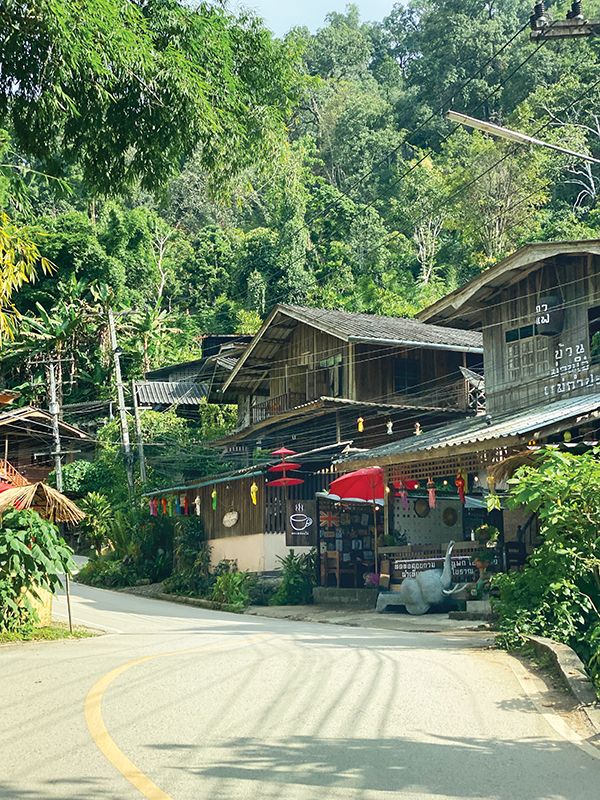
Nestled in the mountains about an hour from Chiang Mai, Mae Kampong is arguably the best-known village in this selection.
Yet, despite its growing popularity, it retains a particular charm.
Wooden houses line a small stream that runs through the village, the inhabitants grow coffee and tea, and the air is much fresher than in the city.
Why visit Mae Kampong?
- Mountain ambiance
- Pleasant temperatures
- Cafés with a view
- Waterfalls within walking distance
- Traditional architecture
Advice
Take the time to wander down the small alleyways rather than only staying on the main street where most visitors tend to congregate.
Ban Mae Klang Luang
Located on the slopes of Doi Inthanon, this village is often overlooked by travellers heading straight for the summit.
It is, however, one of the most beautiful places in the region.
The terraced rice fields, traditional houses and coffee plantations create a magnificent setting.
Why visit Ban Mae Klang Luang?
- Spectacular rice terraces
- Peaceful atmosphere
- Locally grown coffee
- Mountain views
The best time
Between July and October, when the rice paddies are a vibrant green.
Doi Saket
To the east of Chiang Mai, Doi Saket still remains largely off the main tourist trails.
The region offers yet many advantages:
- Rice paddies
- Lakes
- Country cafés
- Small villages
- Scenic routes
The atmosphere there is much calmer than in the tourist sectors of the centre.
Why go?
Because it allows you to discover a more authentic daily life and to take the time to explore without feeling like you're following a tourist itinerary.
Mae On
Often overshadowed by Mae Kampong, the Mae On region is also worth a visit.
It can be found there hilly landscapes, hot springs, plantations and several cafés offering very beautiful views of the surrounding countryside.
What we particularly appreciate
Calm.
Even during the peak season, certain areas remain relatively uncrowded.
The Hmong village of Doi Pui
Most visitors are content with the Doi Suthep temple before heading back down to the city.
A few kilometres further on, however, there is a Hmong village which allows visitors to learn more about the mountain communities of northern Thailand.
Why visit this village?
- Cultural discovery
- Flower gardens
- Handmade products
- View of the mountains
The mountain roads around Samoeng
Sometimes, it's not the destinations that impress the most, but the journeys themselves.
The Samoeng Loop traverse some of the most beautiful routes in northern Thailand.
Along the route, you'll discover:
- Vergers
- Hilly areas of vegetation
- Local villages
- Small markets
- Unexpected points of view
The ideal scenario is to set aside a full day in order to fully enjoy the region.
Hidden mountain cafés
For a few years now, people in the north have been developing numerous cafés in mountainous areas.
Unlike city centre establishments, these often focus on their natural surroundings.
Some terraces overlook the valleys, others are set beside streams or amidst coffee plantations.
The Mae Rim, Mae Kampong and Doi Saket region is bursting with little-known places which are well worth a visit.
Less-trodden waterfalls
The majority of visitors go to the most famous waterfalls.
However, several small waterfalls located in the vicinity of Chiang Mai remain relatively preserved.
Some require a few minutes' walk, but the reward is often well worth it.
- Few visitors
- Untouched nature
- Peaceful ambiance
These places are perfect for those who wish to get away from the more crowded areas.
The local country markets
Village markets are often very different from those in the city centre.
Here, the stalls are mainly intended for locals.
You'll find there:
- Local fruit and vegetables
- Handmade products
- Traditional dishes
- Agricultural products
Even without buying anything, the experience provides a better understanding of daily life in northern Thailand.
The little forgotten temples
Chiang Mai has hundreds of temples.
Most travellers visit the most well-known, but some small neighbourhood temples sometimes offer a much more authentic experience.
Without crowds or organised groups, it is often possible to enjoy the peace of the places and observe the daily lives of the inhabitants.
Why go off the beaten track?
Iconic sites obviously deserve their reputation.
But the most memorable memories are often born in lesser-known places a mountain road, a cafe discovered by chance, a small village passed through on a scooter or a conversation with a local.
This is also what makes The richness of Chiang Mai.
A destination where you can still get a few kilometres away from the centre and feel like you've discovered another world.
For those who like to take their time and explore, these places often hold the most beautiful surprises of the journey.
10. Chiang Mai's Most Beautiful Cafés
If there's one thing that surprises many travellers on their first visit, It's the incredible coffee culture in Chiang Mai.
Over the years, the city has become one of the coffee capitals of Southeast Asia. The northern mountains, in fact, produce some of the best coffees in Thailand, particularly grown in the regions of Chiang Dao, Mae Rim, Mae Kampong, and Doi Saket.
But in Chiang Mai, cafés are far more than just places for an espresso.
Some resemble tropical gardens, others art galleries, while several establishments offer magnificent views of the surrounding mountains.
Even people who aren't passionate about coffee usually end up appreciating the experience.
Chom Cafe
Probably one of the most photographed cafes from Chiang Mai.
From the moment you enter, you get the impression of stepping into an enchanted forest.
Small waterfalls, lush vegetation, wooden footbridges and plays of light create a unique atmosphere.
Why go?
- Spectacular decor
- Very nice photos
- Immersive ambiance
- Magnificent tropical garden
What you need to know
The place is particularly popular in the late morning and the afternoon.
Akha Ama Coffee
Among Chiang Mai's most beloved coffee shops, Akha Ama holds a special place.
Created by a family from the Akha community in northern Thailand, this coffee works directly with local producers from the surrounding mountains.
The atmosphere there is much more authentic than in some cafés designed primarily for social media.
Why discover it?
- Locally sourced coffee
- Inspiring story
- Pleasant view from certain addresses
- Relaxed atmosphere
- More local experience
Even if you're not a big coffee lover, the place allows you to better understand the link between Chiang Mai and the mountain plantations surrounding the region.
No. 39 Cafe
Nestled around a small body of water in astonishing colours, No.39 Cafe offers a completely different atmosphere.
The environment is peaceful and the buildings blend perfectly into the landscape.
Why do we like it?
- Peaceful atmosphere
- Smart design
- Pleasant natural surroundings
It's the sort of place you often end up staying longer than you intended.
Fern Forest Cafe
Located in the Old Town, this café is a true green oasis.
Behind a discreet facade lies a shaded garden filled with tropical plants.
Why discover it?
- Central location
- Beautiful garden
- Relaxed atmosphere
- Excellent break after visiting the temples
The cafés with the most beautiful views
In the mountains around Chiang Mai, some cafés offer exceptional panoramas.
The Mon Jam region is particularly renowned for this.
From the terraces, the view often extends over several valleys covered in vegetation.
On a clear day, the view is impressive.
Sectors to explore
- My Jam
- Mae Rim
- Mae Kampong
- Chiang Dao
- Doi Saket
Cafés to work in
Chiang Mai has long attracted remote workers.
It's not surprising, then, that many establishments have adapted their spaces to welcome this clientele.
What we are generally looking for
- Fast Wi-Fi
- Air conditioning
- Electrical sockets
- Comfortable spaces
- Calm ambiance
The Nimman and Santitham neighbourhoods group together the majority of cafes suitable for working.
Mountain coffees
One of the most enjoyable experiences around Chiang Mai involves leaving the city to discover the cafés nestled in the hills.
Some are accessible after only a few kilometres' drive.
Others require more time but richly reward visitors with their landscapes.
These establishments often allow discoveries of:
- Coffee plantations
- Exceptional panoramas
- A much calmer atmosphere than in the city centre
Thai café: what makes it special
Northern Thailand is increasingly producing quality coffees.
Thanks to the altitude and mountain climate, several local producers are now gaining international recognition.
Many Chiang Mai cafes work directly with local plantations.
This is an excellent opportunity to discover a little-known facet of the country.
The best times to enjoy coffee
Early morning
- Pleasant temperatures
- Ideal light
- Few visitors
On weekdays
- Calmer ambiance
- Often faster service
During the cool season
- Perfect conditions to enjoy the terraces
Some advice
- Don't limit yourself to the most popular cafes on social media.
- Local, independent places often hold nice surprises.
- If you're exploring mountains, plan for several stops along the way.
- Take the opportunity to taste the coffees produced in the region.
In Chiang Mai, cafes are almost tourist attractions in their own right. Whether you're looking for a photogenic spot, a space to work, or simply a nice terrace with mountain views, you'll easily find a place that suits your needs.
And there's a good chance you'll leave with a few favourite coffees added to your travelogue.
11. Markets to discover
It's impossible to visit Chiang Mai without experiencing its markets.
Far more than simple shopping destinations, they are an integral part of local life. People come here to eat, stroll, meet friends, buy a few souvenirs or simply enjoy the atmosphere.
Each market has its own personality. Some primarily attract tourists, while others remain very popular with locals.
To get a feel for Chiang Mai's atmosphere, a few hours spent in the markets are often as rewarding as a guided tour.
Sunday Walking Street
If you had to choose only one market in Chiang Mai, this would probably be it.
Every Sunday evening, a large part of the Old Town transforms into a huge open-air market.
Hundreds of stalls invade the streets and offer:
- Local crafts
- Clothing
- Jewellery
- Handmade products
- Street food
- Music and shows
Why visit?
- The atmosphere is unique
- Very large selection of products
- Numerous local specialities
- Regular animations
What you need to know
The market attracts a huge number of visitors. Arriving in the late afternoon often allows you to enjoy the atmosphere before the biggest crowds.
Saturday Night Market
Less well-known than Sunday's, Saturday's market nevertheless offers an equally enjoyable experience.
Located in the Wua Lai district, it is often considered more authentic and slightly less touristy.
What we appreciate
- Relaxed atmosphere
- Local crafts
- Mixed food
- More fluid circulation
For many travellers, it represents an excellent compromise between local discovery and visiting comfort.
Warorot Market
Warorot is one of Chiang Mai's oldest and most authentic markets.
Here, tourists are in the minority.
The residents mainly come here for their daily shopping.
What is found
- Fresh fruit
- Spices
- Local produce
- Tea
- Flowers
- Clothing
Why visit?
Because it offers a much more realistic insight into daily life in northern Thailand.
Jing Jai Market
Highly prized by locals and expats alike, Jing Jai Market has a different atmosphere to the large tourist markets.
You'll find many local producers, artisans and creators there.
Why is it so pleasing?
- Quality artisan products
- Local food
- Family atmosphere
- Pleasant setting
It is also an excellent place to discover the work of Thai artisans.
Chiang Mai Night Bazaar
For a long time, the Night Bazaar was the most well-known market in the city.
Even today, it attracts many visitors.
What is found
- Souvenirs
- Clothing
- Craftsmanship
- Restaurants
- Glasses
What you need to know
Prices are generally higher than in markets frequented by locals.
Nonetheless, it remains a pleasant visit to discover Chiang Mai's nightlife.
Food markets
To discover local gastronomy, nothing beats food markets.
They allow you to taste a wide variety of dishes for just a few baht.
Some specialities to try
- Khao Soi
- Sai Oua
- Grilled skewers
- Sticky mango rice
- Tropical fruits
Even the most cautious travellers usually end up succumbing to the smells that fill the aisles.
Morning markets
While night markets attract visitors, morning markets remain primarily frequented by locals.
The atmosphere there is totally different.
The traders set up their stalls from the early hours of the day while the residents come to buy the ingredients they need for the day's meals.
Why visit them?
- Discovering local daily life
- To observe the habits of the locals
- Find regional products
You can buy handicrafts, textiles, silver jewellery, paper products, and carved items in Chiang Mai.
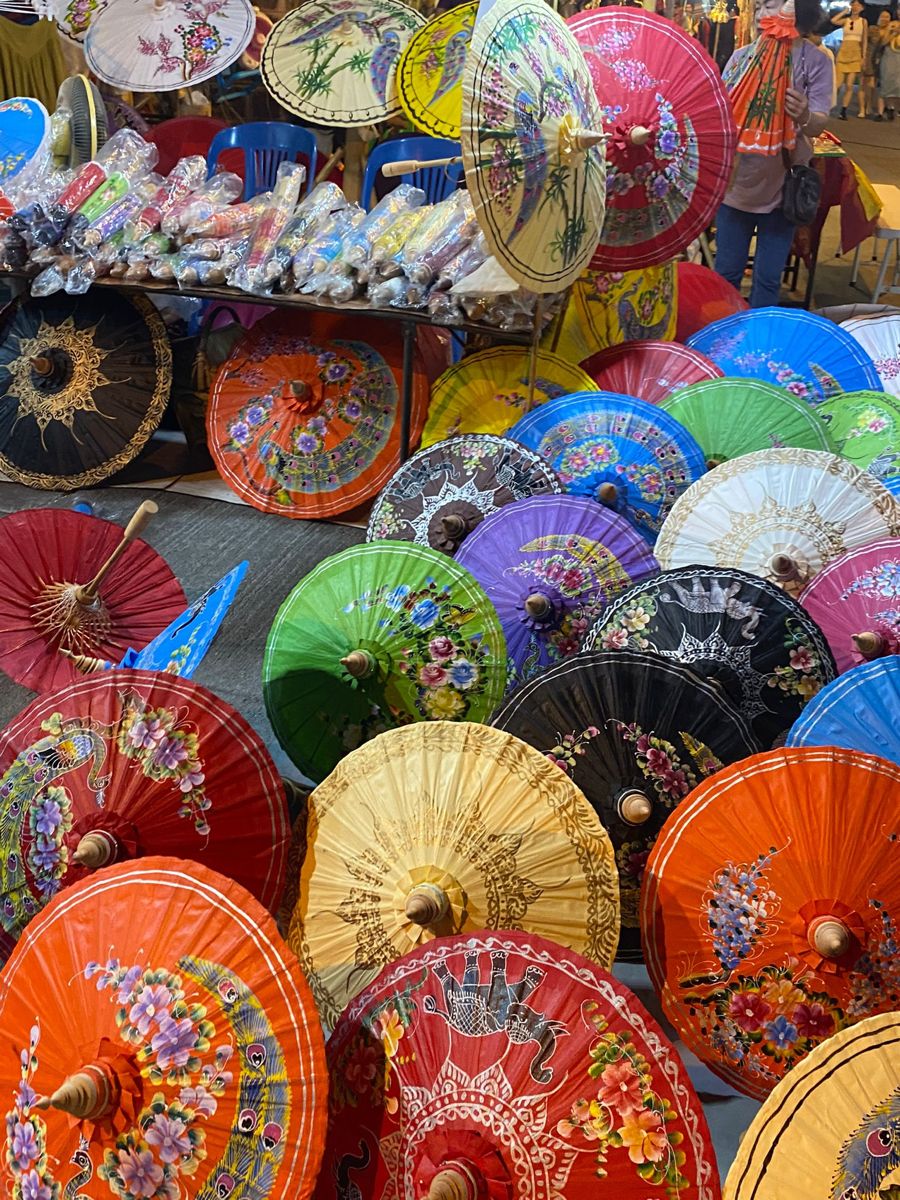
Chiang Mai is renowned for its craftsmanship.
Among the most popular purchases:
- Carved wooden objects
- Craft products from mountain villages
- Traditional textiles
- Ceramics
- Northern Thai tea
- Locally sourced coffee
If you're looking for an authentic souvenir, favour handmade crafts over imported products that can be found everywhere in the country.
Should we negotiate?
The answer depends on the type of market.
In the tourist markets
A little haggling is usually accepted.
In the local markets
The prices are often already very reasonable and haggling is not always necessary.
Some advice
- Always keep smiling.
- Negotiate respectfully.
- Don't try to save a few pence on a handmade artisanal product.
The aim is to find a fair price for everyone.
The best times to visit
Night markets
- Between 5pm and 8pm to avoid the busiest periods.
Morning markets
- Between 6am and 9am to take advantage of peak activity.
Weekend
- The markets are often livelier.
- The supply is generally greater.
Markets that are really worth a visit
If your time is limited, focus on:
For the atmosphere
- Sunday Walking Street
For authenticity
- Warorot Market
For local products
- Jing Jai Market
For shopping
- Night Bazaar
Markets are part of the soul of Chiang Mai. They offer a different way to discover local culture, taste new flavours, and meet the inhabitants in a much more spontaneous setting than the usual tourist sites.
Even without buying anything, a stroll through the markets often remains one of the best ways to feel the city's energy.
12. Nature and waterfalls
Chiang Mai's popularity with nature lovers is no coincidence.
In just a few minutes, it's possible to leave the hustle and bustle of the city and find yourself amidst mountains, rainforests, waterfalls or rice paddies.
This Proximity to nature is one of the region's greatest assets. Whether you enjoy hiking, photography, wild swimming, or simply beautiful scenery, you'll find more than enough to fill several days.
Sticky Waterfalls (Bua Tong Waterfalls)
Among all the waterfalls in the region, the Sticky Waterfalls are probably the most surprising.
Their characteristic lies in the mineral composition of the rocks. Unlike classic waterfalls where the stones are slippery, these offer excellent grip.
It is therefore possible to walk directly on the rocks and even climb along certain sections of the waterfall.
Why visit them?
- Unique experience
- Activity accessible to the whole family
- Pleasant natural surroundings
- Very photogenic
What you need to know
Pack clothes that can get wet. It's hard to resist the urge to explore the different levels of the waterfall.
Mae Sa Waterfall
Located in the Mae Rim region, Mae Sa is one of the best-known waterfalls around Chiang Mai.
It is made up of several levels connected by easily accessible paths.
Why discover it?
- Easy access
- Several viewpoints
- Possibility of walking between the different levels
- Pleasant forest environment
This excursion can easily be combined with other tours in the Mae Rim area.
Huay Kaew Waterfall
Just a few minutes from the town centre, Huay Kaew is often one of the first waterfalls discovered by visitors.
Located at the foot of Doi Suthep, it allows one to enjoy a natural environment without actually leaving Chiang Mai.
Why go?
- Close to the town
- Easy to access
- Good option for a half-day
Even if it's not the most spectacular in the region, its location makes it an interesting visit.
Doi Inthanon
More than just a mountain, Doi Inthanon is a true natural paradise.
The national park comprises:
- Cascades
- Mountain forests
- Hiking trails
- Points of view
- Local villages
It is often considered one of the most beautiful excursions in the entire region.
Pourquoi visiter Doi Inthanon ?
- Varied landscapes
- Cooler climate
- Plenty of activities
- Remarkable flora and fauna
A full day is generally required to make the most of the park.
Wachirathan Waterfall
Among the waterfalls of Doi Inthanon, Wachirathan is undoubtedly the most impressive.
The power of water is spectacular, particularly during the rainy season.
What makes her special
- Impressive height
- Ease of access
- Rainbows are frequent on sunny days
Photographers particularly appreciate this site.
Sirithan Waterfall
Often less frequented than Wachirathan, Sirithan nevertheless offers a very beautiful panorama.
From the observation deck, the view of the waterfall and the surrounding vegetation is magnificent.
Why stop there?
- Little walking
- Lovely view
- Calm atmosphere
The most beautiful hikes around Chiang Mai
The region offers many opportunities for avid walkers.
Some hikes are accessible to beginners, while others require more preparation.
Monk's Trail
One of the most well-known trails.
It connects the city to Wat Pha Lat through the forest.
Why do it?
- Easy to access
- Pristine nature
- Arrival at a magnificent temple
This is an excellent introduction to hiking around Chiang Mai.
Kew Mae Pan
Located within Doi Inthanon National Park, this trail is often considered one of the most beautiful in Thailand.
What one discovers
- Mountain ridges
- Seas of clouds
- Panoramic views
- Montane forest
The hike remains relatively accessible while offering exceptional scenery.
Chiang Dao
The surroundings of Chiang Dao offer several trails for discovering wilder nature.
Why explore this region?
- Impressive mountains
- Few visitors
- Authentic ambiance
It is a sector particularly popular with lovers of open spaces.
The most beautiful landscapes by season
Cool season
- Clear sky
- Pleasant temperatures
- Ideal conditions for hiking
Rainy season
- Cascades at their peak
- Lush vegetation
- Very green landscapes
Hot season
- More demanding conditions
- Early morning visits recommended
Observe the local wildlife
The forests of northern Thailand are home to many animal species.
With a bit of luck, you might be able to spot:
- Tropical birds
- Squirrels
- Butterflies
- Lizards
- Various small mammals
The best time for observation generally remains early in the morning.
Tips for exploring nature around Chiang Mai
- Always take enough water with you.
- Ensure you have suitable footwear for hiking.
- Check the weather before you leave.
- Stick to the marked paths.
- Do not leave any rubbish behind.
Nature is one of Chiang Mai's greatest assets. Even travellers who primarily come for the temples often end up dedicating several days to the mountains, waterfalls, and landscapes of the north.
It is, moreover, this mix of culture, nature and a gentle way of life that makes the region so different from the rest of Thailand.
13. Ethical elephant sanctuaries
If there's one experience many travellers dream of before coming to Thailand, it's Meeting the elephants.
Seeing these giants evolve in their natural habitat is often a highlight of a trip. However, behind some spectacular photos published on social media lies a sometimes very different reality.
Not all sanctuaries are equal.
Some organisations do remarkable work to improve animal welfare, while others continue to use the word «ethical» as a marketing ploy without actually changing their practices.
Before booking a tour, It is therefore important to understand how these places work And what criteria allow us to identify a truly responsible sanctuary?.
Why do elephants hold such an important place in Thailand?
For centuries, elephants have played a major role in the country's history.
They were used for:
- Transport
- Forestry work
- Royal ceremonies
- Certain military activities
For a long time, they participated in logging in the northern mountainous regions.
When this activity was greatly reduced, many landowners turned to tourism to make a living.
This is how the elephant camps we know today emerged.
Why are some camps controversial?
For years, the most popular activities were:
- Elephant rides
- The shows
- Painting demonstrations
- Circus acts
These practices still attract visitors, but they are increasingly being questioned.
For an elephant to accept these types of activities, it often has to undergo a training process that is particularly criticised by many animal welfare organisations.
This is why many travellers today are looking for more sustainable alternatives.
How to recognise a truly ethical sanctuary?
The word «sanctuary» is unfortunately not regulated.
Any organisation can use it in its communications.
Before booking, here are several important criteria to check.
Elephants do not carry visitors
It is generally the first indicator.
Even though some establishments claim that their elephants are treated with respect, elephant rides remain controversial due to the daily weight the animal bears.
Personally, This is an activity I recommend avoiding. Observing an elephant thrive freely in its natural habitat is a far more authentic and respectful experience than riding on its back. Today, there are sufficient responsible alternatives to enjoy an unforgettable encounter without participating in this type of practice.
Animals can move freely
In a responsible sanctuary, elephants spend a large part of their time:
- Walk
- Eat
- To bathe
- Interact with each other
These behaviours are natural and essential for their well-being.
Groups remain limited
The best experiences are often those that welcome few visitors.
This allows:
- A calmer approach
- Less stress for animals
- A better quality of observation
Observation precedes interaction
The primary objective must be to discover the animal and its behaviour.
Certain sanctuaries still permit supervised feeding, but observation generally remains at the heart of the experience.
The explanations are transparent.
A serious establishment takes the time to explain:
- The history of the elephants present
- Their way of life
- The challenges related to their protection
- The functioning of the sanctuary
Can elephants still be fed?
Yes, in some sanctuaries.
Feeding is often part of the activities offered.
This is usually one of visitors' favourite moments.
However, the approach varies between institutions.
Some favour observation more, while others still allow for more direct contact.
The important thing is that this interaction remains respectful of the animal's pace.
Bathing with elephants: good or bad idea?
This is probably one of the most debated topics.
For several years, bathing with elephants has been presented as an ethical activity.
Today, some sanctuaries have chosen to end it in order to limit human interaction.
Others continue to offer this experience in a controlled environment.
Approaches regularly evolve in line with knowledge about animal welfare.
What does a visit to a responsible sanctuary look like?
Each establishment has its own programme, but a typical day often includes:
Introduction to the sanctuary
Discovering its history and missions.
Meet the elephants
Observing animals in their environment.
Feeding
According to the structures.
Walk in nature
Visitors sometimes accompany elephants at a distance as they travel.
Observation time
It is often at this moment that their natural behaviour is best discovered.
Should I choose a half-day or a full day?
Both options have their advantages.
Half day
- Reduced budget
- Suitable for short stays
Full day
- Closer observation
- More relaxed atmosphere
- Better understanding of the work carried out
For those who have the time, a full day generally remains the most enriching experience.
What should I bring?
To make the most of your visit:
- Comfortable shoes
- Lightweight clothing
- Sun protection
- Mosquito repellent
- Camera
- Reusable water bottle
During the rainy season, waterproof clothing can also be useful.
The most frequent errors
Choose solely based on price
The lowest price doesn't always mean the best experience.
Book without inquiring
Always take a few minutes to review the sanctuary's practices.
Look only for perfect photos
The best encounters with elephants are not necessarily the most visually spectacular.
A meeting that often marks travellers
Even those who aren't particularly interested in animals often leave impressed.
An adult elephant can weigh several tonnes, but despite its size, it often exudes a form of calm and serenity that is difficult to describe.
Watching a herd move freely in the forest, observing the interactions between individuals, or simply watching them go about their lives in their natural environment allows you to discover a completely different facet of the animal.
An experience to be lived with respect
Meeting elephants in Thailand can become one of the most beautiful memories of a trip.
But this experience becomes even more meaningful when it contributes to the well-being of animals rather than their exploitation.
Taking the time to choose a responsible sanctuary not only allows for a more authentic encounter but also supports organisations that genuinely work to provide elephants with better living conditions.
It's ultimately what transforms a simple tourist activity into a much more enriching experience.
14. What to do around Chiang Mai?
Chiang Mai already has enough activities to fill several days. However, limiting your trip to the city would mean missing out on a large part of what makes northern Thailand so charming.
Within two hours' drive, the landscapes change completely. Mountains gradually replace urban areas, villages become more numerous, and the atmosphere transforms.
Some of the most beautiful discoveries are found precisely outside of Chiang Mai.
Mae Kampong
Among all possible excursions, Mae Kampong often features at the top of the list.
This small village nestled in the mountains offers a totally different atmosphere to that of the city.
The wooden houses follow the course of a stream, the inhabitants cultivate coffee and tea, and the air is noticeably cooler.
Why visit Mae Kampong?
- Authentic ambiance
- Pleasant temperatures
- Mountain cafés
- Waterfall within walking distance
- Traditional architecture
How long to allow?
A full day is ideal.
If your schedule allows, spending a night there lets you discover the village once the day visitors have left.
Chiang Dao
Located north of Chiang Mai, Chiang Dao is often considered one of the most beautiful regions in northern Thailand.
The mountain dominating the landscape is visible for several kilometres around.
The region attracts nature, hiking and photography enthusiasts.
To discover
- The Chiang Dao Caves
- Mountain viewpoints
- Panoramic cafés
- The surrounding villages
Why go?
The landscapes are among the most impressive in the entire province.
My Jam
Located in the heights of Mae Rim, Mon Jam has become very popular with the locals of Chiang Mai.
The region offers magnificent panoramas of the mountains and a much cooler atmosphere than in the valley.
What we appreciate
- Panoramic views
- Flower gardens
- Unusual accommodation
- Cafés with a view
It's also a great destination for watching the sunrise.
Doi Inthanon
Known as the ‘Roof of Thailand’, Doi Inthanon is one of the region’s most famous day trips.
The national park groups together several major attractions:
- Cascades
- Hiking trails
- Points of view
- Local villages
- Royal pagodas
Why is this excursion so popular?
Because it allows you to discover various aspects of northern Thailand in a single day.
Mae Rim
Often used as a stopover on the way to Mon Jam or the mountains, Mae Rim is also well worth a visit.
The region has:
- Country cafés
- Botanical Gardens
- Cascades
- Farms
- Restaurants with a view
The atmosphere there is much more relaxed than in the city centre.
Mae Wang
Less well-known than other destinations, Mae Wang offers magnificent rural landscapes.
The region is popular for:
- Its verdant valleys
- Its rivers
- Its villages
- His outdoor activities
It primarily attracts travellers wanting to discover a more authentic north.
Mountain villages
Northern Thailand has many villages nestled in the mountains.
Each community has its own traditions, crafts, and way of life.
Why visit them?
- Cultural discovery
- Magnificent landscapes
- Local dates
- Handmade products
These visits often allow for a better understanding of the region's cultural diversity.
Coffee plantations
Coffee cultivation has developed significantly in northern Thailand.
Some plantations open their doors to visitors.
What one discovers
- Cultivation methods
- The roasting process
- Local varieties
- Mountainous landscapes
A particularly interesting visit for coffee lovers.
Hot springs
Less famous than in some other northern provinces, several natural hot springs are accessible from Chiang Mai.
They make a pleasant stop after a day of hiking or exploring.
Scenic routes
Some excursions are as much about the journey as they are about the destination.
Roads that cross:
- Mae Kampong
- Samoeng
- Mae Rim
- Chiang Dao
regularly offer magnificent panoramas of the valleys and mountains.
Take the time to stop when you see an interesting viewpoint. The most beautiful scenery isn't always on the tourist maps.
One day or several days?
For a day
- Mae Kampong
- My Jam
- Doi Inthanon
- Mae Rim
For two days or more
- Chiang Dao
- Mountain villages
- Road trip in the north
Travellers who take the time to explore the surrounding areas often discover a region that is completely different from the image they had of Chiang Mai.
The excursions that are really worth visiting
If you're short on time, here are the destinations I would prioritise:
For landscapes
- Doi Inthanon
For the local atmosphere
- Mae Kampong
For the mountains
- Chiang Dao
For cafés and viewpoints
- My Jam
For a varied day
- Mae Rim
The surroundings of Chiang Mai are a destination in their own right. Many travellers arrive to visit the city and quickly realise that some of their most beautiful discoveries are to be found in the mountains, valleys, and villages that surround it.
15. The best day trips
One of the great advantages of Chiang Mai is the diversity of day trips accessible.
Mountains, waterfalls, traditional villages, spectacular temples or scenic drives: it often only takes a few hours’ detour from the city to discover a completely different side of Northern Thailand.
If your stay is limited or you prefer to sleep in the same place each night, these excursions make it easy to explore the most beautiful sites in the region.
Doi Inthanon: The Roof of Thailand
If you had to choose only one excursion, Doi Inthanon would probably be among the best options.
This national park is home to Thailand's highest point as well as some of the country's most impressive landscapes.
What you will discover
- The famous royal pagodas
- Spectacular waterfalls
- Walking trails
- Mountain villages
- Exceptional panoramas
Duration
A full day is needed to fully enjoy the park.
For whom?
- Nature lover
- Photographs
- Families
- Randonneurs
Mae Kampong: immersion in a mountain village
About an hour from Chiang Mai, Mae Kampong offers a completely different experience.
The village is set in a verdant valley with a small stream running through it.
The traditional houses, cafés, and surrounding forests create a particularly pleasant atmosphere.
On the agenda
- Walk in the village
- Discovering local cafés
- Mae Kampong Waterfall
- Kew Fin's Point of View
- Handmade products
Duration
Full day recommended.
For whom?
- Couples
- Travellers seeking authenticity
- Photography enthusiasts
Chiang Dao: mountains and nature
Less frequented than other destinations, Chiang Dao is nevertheless one of the most beautiful excursions in the region.
The mountain that dominates the landscape has become one of the symbols of Northern Thailand.
To discover
- Chiang Dao Caves
- Panoramic cafes
- Hidden temples
- Mountain landscapes
Duration
Plan a full day.
Pourquoi cet excursion plaît autant ?
It allows you to discover a wilder nature and a region still relatively untouched by mass tourism.
Mon Jam: panoramic views and mountain cafés
Mon Jam is one of the favourite getaways for the residents of Chiang Mai.
Thanks to its altitude, the climate is more pleasant and the panoramas are magnificent.
What you will find
- Flower gardens
- Cafés with a view
- Unusual accommodation
- Panoramic views
Duration
Half a day might be enough, but a full day allows you to make the most of the region.
Chiang Rai and the White Temple
Even though Chiang Rai is in another province, many travellers choose to dedicate a day to it.
The excursion is long but particularly popular.
The most visited sites
- White Temple
- Blue Temple
- Black House
- Hot springs
Duration
Around 12 hours according to the programme.
What you need to know
The pace is often fast. This excursion is better suited to travellers who want to see as much as possible in a short amount of time.
Samoeng Loop: the unmissable road trip
Rather than a specific destination, the Samoeng Loop is a scenic route that traverses several mountainous regions around Chiang Mai.
Why do this loop?
- Magnificent landscapes
- Local villages
- Vergers
- Country cafés
- Little traffic on some sections
Duration
A full day.
Ideal for
- Scooter
- Motorcycle
- Car
Mae Rim: nature and relaxation
Located to the northwest of Chiang Mai, Mae Rim is easily accessible and boasts numerous attractions.
Among the most popular
- Botanical Gardens
- Cascades
- Cafés with a view
- Farms
- Outdoor activities
Duration
Half-day or full-day.
The villages of the north
Some agencies offer excursions that allow you to discover several mountain villages.
These excursions offer an interesting insight into the cultural diversity of northern Thailand.
What one discovers
- Traditional crafts
- Rural life
- Mountain landscapes
- Local gastronomy
Which excursion should you choose, depending on your profile?
If you like spectacular landscapes
- Doi Inthanon
- Chiang Dao
If you're looking for authenticity
- Mae Kampong
- Mountain villages
If you like cafes and viewpoints
- My Jam
- Mae Rim
If this is your first trip to the North
- Chiang Rai and the White Temple
If you like driving
- Samoeng Loop
Do I need to book in advance?
During the peak season, some very popular excursions quickly get booked up.
It is advisable to book in advance for:
- Doi Inthanon
- Chiang Rai
- Mae Kampong
- Some mountain activities
More flexible travellers can generally organise their trips directly on arrival.
To organise yourself or go through an agency?
The two solutions have their advantages.
Autonomously
- More freedom
- Stop whenever you want
- Bespoke rhythm
Through an agency
- No organisation
- Transport included
- Information provided by the guide
For nearby destinations like Mae Kampong or Mon Jam, self-driving is often very pleasant. For longer excursions like Chiang Rai, many travellers appreciate the comfort of an organised tour.
Excursions not to be missed
If your stay is short and you have to make choices:
Top 3
- Doi Inthanon
- Mae Kampong
- Chiang Dao
These three destinations perfectly encapsulate what makes Northern Thailand so captivating: mountains, nature, villages, and exceptional landscapes.
They offer excellent complementarity with the temples, markets, and urban atmosphere of Chiang Mai.
16. Culinary specialties of Northern Thailand
Thai cuisine is world-renowned, but what many travellers don't realise is that each region has its own specialities.
In the north of the country, particularly around Chiang Mai, the flavours are different from those found in Bangkok or the southern islands.
The dishes are often less spicy, more fragrant and influenced by the culinary traditions of the Lanna Kingdom as well as the neighbouring cultures of Myanmar, Laos and Southern China.
Discovering Chiang Mai also means exploring its cuisine.
Khao Soi: The iconic dish of Chiang Mai
It's impossible to start this chapter any other way.
Khao Soi is arguably the most famous dish in Northern Thailand.
This coconut curry noodle soup combines several textures and flavours:
- Creamy broth
- Sweet spices
- Fresh noodles
- Crispy noodles
- Lime
- Marinated onions
Traditionally, the dish is served with chicken or beef.
Why is it absolutely essential to try it?
Because it perfectly represents Chiang Mai's culinary identity.
Many travellers return to the same restaurant multiple times simply to order another bowl of Khao Soi.
Sai Oua: the sausage from the north
La Sai Oua is a speciality that can be found in almost all local markets.
This sausage is made from pork and a particularly fragrant blend of aromatic herbs.
This includes, among others:
- Lemongrass
- Galangal
- Kaffir lime leaves
- Pepper
- Garlic
What makes her special
Unlike Western sausages, its taste is much more herbaceous and spicy.
It often accompanies local meals.
Nam Prik Noom
Nam Prik Noom is a paste made from grilled green chillies served with fresh or cooked vegetables.
Very popular in northern Thailand, it accompanies many meals.
Taste
- Lightly smoked
- Noted
- Fresh
It is one of the most representative sauces from the region.
Nam Prik Ong
Another must-try specialty, Nam Prik Ong is prepared with tomatoes, minced pork, and spices.
The texture sometimes resembles a spicy tomato sauce.
What is it served with?
- Raw vegetables
- Sticky rice
- Pork crackling
The contrast between the fresh vegetables and the hot sauce works particularly well.
Curry Hang Lay
This northern curry has an interesting history.
Its origin is strongly influenced by Burmese cuisine.
Unlike Thai coconut milk-based curries, this one is richer in spices and has a deep, slightly tangy flavour.
Main ingredients
- Pork
- Ginger
- Garlic
- Turmeric
- Tamarind
It's a dish that is particularly enjoyed during holidays and family gatherings.
Khan Toke: more than just a meal
The Khan Toke is not a dish but a true cultural experience.
Traditionally, several dishes are served on a small, low, round table around which diners sit.
The meal is often accompanied:
- Of traditional music
- Dances of the North
- Of cultural shows
Why try?
This allows you to discover several regional specialities during the same meal.
Sticky rice
In Northern Thailand, sticky rice plays a very important role.
Unlike the more common jasmine rice found in the rest of the country, it is generally eaten with the fingers.
It accompanies numerous traditional dishes.
Northern soups
The inhabitants of Chiang Mai particularly appreciate flavourful soups.
Among the most popular:
Tom Kha Gai
Coconut milk soup with galangal and chicken.
Kaeng Jued
Light broth often served with vegetables and tofu.
These dishes are perfect for those who want to discover milder cuisine.
Fruits to discover
Chiang Mai's markets are brimming with tropical fruits.
Depending on the season, you can try:
- Mango
- Mangosteen
- Longan
- Lychee
- Rambutan
- Dragon fruit
- Pineapple
The northern region is particularly renowned for the quality of some of its fruits.
Desserts not to be missed
Thai cuisine is not limited to savoury dishes.
Mango Sticky Rice
The most famous.
A simple yet delicious combination of ripe mango, sticky rice, and coconut milk.
Coconut Ice Cream
Coconut ice cream served in a coconut shell.
Khanom Krok
Small crispy bites made with coconut milk.
Street food markets
To discover the local gastronomy, markets remain the best places.
You'll find there:
- Regional specialities
- Very affordable prices
- A wide variety of dishes
Markets also allow us to observe local eating habits.
Should you be afraid of street food?
This is a common question.
In the majority of cases, street food in Chiang Mai is safe when a few simple rules are followed:
- Choose the frequented stalls
- Prefer meals prepared in front of you
- Check general cleanliness
Queues are often an excellent indicator.
Where to eat in Chiang Mai?
The city is brimming with good places.
For local specialities
Family-run markets and restaurants often remain the best options.
For cafés and brunches
The Nimman neighbourhood offers an impressive choice.
For a more traditional experience
Restaurants offering Khantoke dinners allow you to discover several regional dishes in a cultural setting.
The flavours that define Chiang Mai
Northern cuisine is distinguished by:
- Herbs
- Sweet spices
- Smoky flavours
- Fresh produce
- Sticky rice
It is generally less spicy than that from certain southern regions.
Dishes you absolutely must try
If your stay is short, try at least:
- Khao Soi
- Sai Oua
- Nam Prik Noom
- Curry Hang Lay
- Mango Sticky Rice
These specialities already offer an excellent insight into Chiang Mai's culinary richness.
And as is often the case in Thailand, some of the best culinary discoveries are not necessarily found in the most well-known restaurants, but at a small market stall or a family-run establishment where recipes have been passed down through generations.
17. Chiang Mai as a family
Chiang Mai is often considered the’one of the most pleasant destinations in Thailand for family travel.
The city offers an excellent balance between cultural activities, nature, modern infrastructure and a relaxed pace of life. Unlike some large Asian metropolises, it is relatively easy to get around and find activities suitable for all ages.
Whether you're travelling with young children, teenagers or multiple generations, Chiang Mai offers varied experiences to satisfy the whole family.
Pour quelles raisons Chiang Mai est-elle une destination si appréciée des familles ?
Several factors explain its popularity.
A human-sized city
Even though Chiang Mai is the second city in the country, it remains much easier to get to grips with than Bangkok.
Travel is generally straightforward and the distances are reasonable.
A more relaxed pace
The atmosphere is calmer than in the large seaside resorts or regional capitals.
This makes the days less tiring for the children.
A wide variety of activities
Between the temples, waterfalls, markets, animals, cafés, and mountains, it's easy to switch between discoveries.
Child-friendly temples
Not all temples necessarily captivate younger people.
To make the visit more enjoyable, it might be worth favouring those that offer a special setting.
Wat Pha Lat
The forest, the stream and the stone stairs create an atmosphere that often appeals to children.
Wat Umong
Underground tunnels allow for a more entertaining visit.
Doi Suthep
The panoramic view and the numerous architectural details generally attract their attention.
The important thing is not to multiply temple visits in the same day.
The waterfalls
Waterfalls are often one of families' favourite activities.
Sticky Waterfalls
It's probably the best option.
The ability to walk and climb directly on the rocks entertains adults and children alike.
Mae Sa Waterfall
The different levels of the waterfall allow for a pleasant walk in the heart of nature.
Discover the elephants
Meeting elephants remains a highlight for many families.
Responsible sanctuaries allow us to observe these animals in good conditions while raising children's awareness of their protection.
Why does this activity work so well?
Because it combines discovery, emotion, and learning.
Night markets
Markets are often a great family activity.
Children generally enjoy:
- The smells of local cuisine
- Street performances
- The musicians
- Little treats
- Handicrafts
The Sunday Walking Street is particularly lively.
Family-friendly cafes
Chiang Mai has many establishments that feature:
- Large gardens
- Outdoor spaces
- Playgrounds
- Of natural environments
Some cafes are almost like parks where children can run around while the parents enjoy a break.
Parks and green spaces
Even though Chiang Mai is primarily known for its temples, several spaces offer opportunities for relaxation.
Nong Buak Hard Park
Situated in the Old Town, it makes for a pleasant break between visits.
Ang Kaew Reservoir
Much loved by locals, this body of water surrounded by greenery is ideal for a leisurely stroll.
Outdoor activities
The surroundings of Chiang Mai are brimming with possibilities.
Mae Kampong
The village offers a calm and secure environment.
My Jam
Mountain landscapes generally please the whole family.
Doi Inthanon
The waterfalls, easy trails and viewpoints allow for a varied day out.
Cookery classes
Many schools offer programmes that are suitable for families.
Children often enjoy getting involved in meal preparation and discovering local ingredients.
It's also a great way to discover Thai culture in a different way.
Animals and educational farms
In the vicinity of Chiang Mai, several farms welcome visitors.
Children can observe there:
- Buffaloes
- Goats
- Chickens
- Rabbits
- Farm animals
These visits perfectly complement the nature excursions.
Family-friendly accommodation
When choosing a hotel, certain criteria can make all the difference.
To be preferred
- Swimming pool
- Family rooms
- Green spaces
- Quiet location
The Mae Rim, Riverside, and certain hotels around the Old Town are particularly suitable.
Some practical tips
Plan in breaks
The weather can be tiring, especially during the hot season.
Vary your activities
A good balance between culture, nature, and moments of relaxation generally keeps everyone motivated.
Start early
The temperatures are more pleasant in the morning and the sites are less crowded.
To plan for water
Staying hydrated is essential throughout the day.
Example of a successful family day out
Morning:
- Visit to Doi Suthep
Lunch
- Restaurant with a view
Afternoon:
- Sticky Waterfalls
Evening
- Night market
This combination allows you to discover several facets of Chiang Mai without it feeling too rushed.
Is Chiang Mai a good family destination?
The answer is clearly yes.
Few destinations in Thailand offer such a diversity of activities in such a pleasant environment.
Between the temples, mountains, elephants, markets, and waterfalls, it is easy to create a trip suitable for all members of the family.
This is also one of the reasons why many travellers return to Chiang Mai multiple times over the years.
18. Chiang Mai for digital nomads
Au fil des années, Chiang Mai est devenue l’une des destinations touristiques les plus prisées de Thaïlande. The most popular global destinations for remote workers.
Each year, thousands of entrepreneurs, freelancers, content creators and remote workers choose to settle there for a few weeks, several months or sometimes even several years.
But why does a city in northern Thailand attract so many people from all over the world?
The answer lies in a unique blend of quality of life, reasonable cost, modern infrastructure, and pleasant environment.
Pourquoi Chiang Mai attire-t-elle autant les nomades numériques ?
Few cities offer such an interesting balance.
In Chiang Mai, it is possible to enjoy:
- Of a relatively affordable cost of living
- From an excellent range of coffees and co-workings
- With a high-performance internet connection
- A pleasant climate for much of the year
- Easy access to nature
Add to that a significant international community and you quickly understand why the city has become a benchmark in this field.
The cost of living
One of the main reasons for its success remains its accessible budget.
Of course, the cost depends heavily on individual lifestyles, but Chiang Mai still allows one to live comfortably today on a budget often lower than that of many European or North American cities.
The main expenses
- Accommodation
- Food
- Transport
- Internet
- Leisure
The presence of numerous accommodations suitable for medium-term stays also facilitates settling in.
The best neighbourhoods to live and work in
Not all neighbourhoods are necessarily suitable for the same profile.
Nimman
It's the best-known neighbourhood among remote workers.
You'll find there:
- Modern cafés
- Coworking spaces
- International restaurants
- Boutiques
- Shopping centres
The atmosphere is dynamic and cosmopolitan.
Santitham
Located near Nimman, Santitham offers a more local atmosphere.
Why do some prefer it?
- Rents often more affordable
- Local restaurants
- More authentic ambiance
It allows you to enjoy the benefits of Nimman while staying slightly away from its hustle and bustle.
Old Town
Some people particularly appreciate the historic charm of the Old Town.
Advantages
- Temples
- Cafés
- Pleasant atmosphere
- Numerous services within walking distance
Doi Saket and the surrounding area
For several years now, some remote workers have been seeking more peace and quiet, and space.
More rural areas attract those who favour nature over urban living.
Coworking spaces
Chiang Mai has many spaces specifically designed for remote work.
They generally offer:
- Broadband internet
- Air conditioning
- Meeting rooms
- Relaxation areas
- Food and drink
These places also allow you to meet other entrepreneurs and travellers.
Cafés to work in
Many establishments are happy to welcome people working on computers.
What we are generally looking for
- Stable Wi-Fi
- Plenty of electrical sockets
- Comfortable seats
- Calm ambiance
The choice is particularly extensive in the Nimman and Santitham districts.
Internet quality
It is often an essential criterion.
The good news is that Chiang Mai has excellent internet infrastructure.
The majority of homes, cafes and co-working spaces today offer widely sufficient connections for:
- Video conferences
- Remote working
- Content creation
- Streaming
- File transfer
The international community
One of the advantages of Chiang Mai is how easy it is to meet other people with a similar lifestyle.
The town hosts:
- Entrepreneurs
- Freelancers
- Developers
- Content creators
- Consultants
- Long-distance travellers
Numerous events provide opportunities to build professional or friendly contacts.
Daily life in Chiang Mai
A typical day might look like this:
- Working in a cafe in the morning
- Lunch in a local restaurant
- Afternoon work session
- Thai massage in the evening
- Night market or restaurant in the evening
This combination of productivity and quality of life largely explains the city's popularity.
The advantages of Chiang Mai
Cost of living
Still attractive compared to many Western destinations.
Nature
Mountains, waterfalls and villages are quickly accessible.
Safety
The city is generally considered safe.
Climate
Very pleasant for a large part of the year.
Infrastructure
The internet, transport and services are more than adequate for working efficiently.
The disadvantages to be aware of
No destination is perfect.
Burning Season
Air quality can deteriorate significantly during certain times of the year.
Circulation
Certain roads become busy at peak times.
Growing popularity
Certains quartiers sont aujourd’hui beaucoup plus fréquentés qu’il y a quelques années.
Can one live for several months in Chiang Mai?
Absolutely.
Many travellers arrive for a few weeks and end up extending their stay.
The city is particularly well-suited for medium or long-term stays thanks to:
- Its cost of living
- His/Her/Its surroundings
- His comfort
- Its international community
Is Chiang Mai the best city in Thailand for remote working?
The answer obviously depends on the individual.
Some people will prefer Bangkok for its dynamism or the islands for their proximity to the sea.
But when seeking a balance between comfort, budget, nature, and infrastructure, Chiang Mai often remains one of the country's most attractive destinations.
Indeed, it is this ability to combine work, quality of life, and discoveries that continues to attract thousands of people from all over the world every year.
19. Budget for visiting Chiang Mai
one of the reasons Chiang Mai attracts so many travellers is its Excellent value for money.
Whether you're travelling on a tight budget or looking for more comfort, it is easy to tailor your stay to your desires.
Of course, expenses vary depending on the season, the type of accommodation chosen, and planned activities. The figures presented here mainly allow for a realistic estimate to prepare for your trip.
Is Chiang Mai an expensive destination?
Compared to many Western destinations, the answer is clearly no.
Even though prices have increased in recent years, Chiang Mai remains generally more affordable than:
- Bangkok
- Phuket
- Koh Samui
- Many European destinations
This is particularly true for accommodation and catering.
Accommodation budget
Accommodation often represents the biggest expense of a trip.
Small budget
- Guesthouses
- Simple guesthouses
- Budget private rooms
Comfortable budget
- Hotels with a pool
- Modern rooms
- Central locations
High-end
- Resorts
- Boutique hotels
- Villas with mountain views
The offering is very varied, which makes it easy to find accommodation to suit your budget.
Food budget
Food often turns out to be one of the pleasant surprises of a trip.
Street food
Markets allow you to eat at a low cost while discovering local cuisine.
Local restaurants
Excellent value for money.
International restaurants
More expensive but generally cheaper than in many Western countries.
Cafés
Chiang Mai has a real coffee culture. Prices remain reasonable even in the most popular establishments.
Budget transport
Travel expenses depend mainly on your mode of transport.
Get a Bolt
Urban mobility practices.
Songthaews
Cost-effective solution for discovering the city.
Scooter
Very popular with travellers wishing to explore the surrounding area.
Car
More comfortable for families or mountain excursions.
Budget activities
Some activities are free while others require a larger budget.
Inexpensive
- Temples
- Markets
- Walks in the Old Town
- Parks
Mid-range budget
- Cooking class
- Massages
- Some excursions
Higher budget
- National Park Days
- Guided activities
- Elephant sanctuaries
- Private excursions
Budget for souvenirs
Chiang Mai is renowned for its handicrafts.
The most frequent purchases are for:
- Handmade products
- Local café
- Tea
- Textiles
- Wooden objects
Markets generally offer souvenirs to suit all budgets.
Budget traveller
This type of stay is suitable for travellers who prioritise:
- Basic accommodation
- Street food
- Economic movements
Chiang Mai remains one of the most accessible destinations in the country for this profile.
Comfortable budget
This is probably the choice of the majority of visitors.
It allows you to enjoy:
- Of a good hotel
- The varied restaurants
- Of several activities
- Of a few excursions
Without breaking the bank.
High-end budget
Even when opting for quality hotels, renowned restaurants and private excursions, Chiang Mai often remains more affordable than other tourist destinations in Asia.
How to save money during your stay?
Travel off-peak
The prices are often more attractive.
Use local transport
Songthaews make it easy to reduce certain expenses.
Prefer restaurants frequented by locals
They often offer excellent quality for a reasonable price.
Book certain activities in advance
This sometimes allows you to benefit from better rates.
Do you need to bring a lot of cash?
Even though bank cards are accepted in many establishments, it is still useful to keep a little cash for:
- The markets
- The small restaurants
- Local transport
- Some shops
There are plenty of vending machines all over the city.
Is Chiang Mai good value for money?
It's probably one of the most balanced destinations in Thailand.
You'll find there:
- Accommodation to suit all budgets
- Excellent cuisine
- Varied activities
- Magnificent landscapes
- A pleasant atmosphere
Without the prices sometimes seen in certain very touristy seaside destinations.
For many travellers, it is precisely this combination of quality of life, diversity of experiences and reasonable cost that makes Chiang Mai such a popular destination.
20. Itineraries based on length of stay
One of the most frequent questions before a trip to Chiang Mai is a simple one: How long should I allow?
The answer obviously depends on your desires. Some travellers only stay for two or three days before continuing their exploration of Thailand, while others spend a whole week, or even longer.
Here are a few ideas to help you plan your trip, depending on how much time you have.
Chiang Mai in 2 days
Two days allow you to discover the main must-sees.
To be preferred
- Old Town
- Wat Chedi Luang
- Wat Phra Singh
- Doi Suthep
- Night market
The aim is mainly to discover the general atmosphere of the city.
Chiang Mai in 3 days
With an extra day, it becomes possible to get out of the city centre.
To add
- Sticky Waterfalls
- Mae Rim
- A mountain coffee
- A cooking class
This itinerary is perfect for a first trip to Northern Thailand.
Chiang Mai in 5 days
Five days is enough to explore the city at a leisurely pace.
Suggestions
- Main temples
- Markets
- Doi Suthep
- Mae Kampong
- A day in the countryside
- A traditional massage
This is often the ideal duration for a first discovery.
Chiang Mai in 7 days
A week offers more freedom.
You can alternate between:
- Culture
- Gastronomy
- Nature
- Excursions
- Free time
This formula also allows you to explore several regions around Chiang Mai.
Chiang Mai in 10 days or more
From ten days onwards, it becomes possible to discover northern Thailand in more depth.
You can notably include:
- Chiang Dao
- Doi Inthanon
- Mae Kampong
- Mountain villages
- Scenic routes
- Relaxation days
The pace becomes much more pleasant and leaves more room for spontaneous discoveries.
Should we run from one site to another?
One of the most common mistakes is trying to see everything in a few days.
Chiang Mai isn't a place to be discovered like a checklist of attractions.
Taking the time to wander through a market, stopping at a cafe with a view, or simply exploring a neighbourhood on foot are often some of the best travel memories.
What duration do you recommend?
Very short stay
2 to 3 days
First discovery
5 days
Comfortable journey
7 days
In-depth exploration
10 days or more
The most important
Whatever the length of your stay, try to keep some flexibility.
Some experiences don't feature in any itinerary: an unexpected sunset, a local market discovered by chance, or a little café hidden around a bend in a mountain road.
It is often these moments that make a trip to Chiang Mai truly memorable.
For detailed day-by-day itineraries, with maps, addresses, travel times and practical tips, consult the Chiang Mai Premium Guide.
21. Mistakes to avoid in Chiang Mai
Chiang Mai is a relatively easy destination to explore, even for a first trip to Thailand.
However, certain mistakes are made regularly and can sometimes spoil part of the stay.
The good news is that they are easy to avoid if you know about them in advance.
Here are the main pitfalls and blunders that many travellers encounter.
Underestimating distances
On a map, everything seems close.
In reality, several of the most popular attractions are located a fair distance from the city centre.
For example:
- Mae Kampong requires more than an hour's drive.
- Doi Inthanon requires a full day.
- Chiang Dao isn't a place you can visit in a few hours.
Planning too many activities in the same day often leads to spending more time travelling than enjoying the places themselves.
Visiting during the Burning Season without knowing
This is probably the most common mistake.
Many travellers book their stay between March and April without knowing about the existence of Burning Season.
Depending on the year, air quality can significantly deteriorate during this period.
Possible consequences
- Limited views
- Greyer sky
- Less enjoyable outdoor activities
This does not mean that Chiang Mai should be absolutely avoided, but it's important to be informed before booking.
Stay only in the Old Town
The Old Town is obviously worth a visit.
But limiting your stay to this neighbourhood would mean missing out on a large part of what the region has to offer.
The mountains, villages, waterfalls, and landscapes around Chiang Mai are among its greatest assets.
Even a simple day trip allows you to discover another side of northern Thailand.
Wanting to visit too many temples
Chiang Mai has over 300 temples.
It's impossible to visit them all.
At the start of the trip, many visitors plan several temples each day before realising they end up looking the same.
It is better to select a few emblematic sites and take the time to appreciate them.
Choosing an elephant sanctuary without doing your research
Not all establishments follow the same practices.
Before booking, take the time to check:
- The activities on offer
- The living conditions of animals
- Recent reviews
- The philosophy of the sanctuary
A little research can often prevent nasty surprises.
Forget about the mountain weather
The climate can be very different between the city centre and certain mountainous areas.
At Doi Inthanon or Chiang Dao, temperatures can be much cooler, especially in the early morning.
Many travellers arrive in shorts and t-shirts before discovering that an extra light layer would have been very useful.
Hiring a scooter without experience
The scooter is an excellent way to explore the region.
However, some routes include:
- Tight bends
- Height gains
- Local circulation
If you've never ridden a scooter before, it might be best to opt for other means of transport.
Safety must always remain the priority.
Neglecting travel insurance
This is an error that affects all of Thailand, not just Chiang Mai.
A simple scooter accident or a medical problem can quickly lead to significant costs.
Appropriate insurance allows for much more peaceful travel.
Not allowing enough time
Many travellers attach:
- A week in Bangkok
- A week in the islands
- Two days in Chiang Mai
They later regretted not having spent more time in the north.
The region often deserves more than just a quick stopover.
Forgetting to book during major festivals
Yi Peng and Loy Krathong attract visitors from all over the world every year.
The best-located hotels sometimes get fully booked several months in advance.
If your trip coincides with these events, anticipate your bookings.
Only eat in tourist areas
The restaurants located near the most frequented sites are not always the most interesting.
Some of the best culinary discoveries are found in:
- The markets
- The small streets
- Residential areas
Don't hesitate to walk a little away from the most crowded areas.
To want to organise everything down to the last minute
Chiang Mai is a destination that is particularly well suited to improvisation.
Planning the main points of your trip is useful, but leaving a little room for spontaneous discoveries often leads to the best moments.
A roadside cafe discovered by chance, an unexpected local market, or a recommendation received on site can sometimes become the most memorable moments of a trip.
Key takeaways
Most mistakes made in Chiang Mai are not serious.
They generally stem from a lack of information or an overly ambitious programme.
By taking the time to prepare your trip, remaining flexible, and occasionally venturing off the beaten path, you will fully enjoy everything this region has to offer.
And above all, don't forget that Chiang Mai isn't just about its monuments. Part of its charm lies precisely in the unexpected moments, the small discoveries, and the encounters that happen outside the planned itinerary.
22. My favourite tips and addresses
After exploring the temples, mountains, markets, and villages around Chiang Mai, it's time to share some more personal recommendations.
These are not necessarily the most famous or most photographed places. Some rarely appear in classic guidebooks, while others are well-known but deserve more time than visitors typically afford them.
If you were to take away only a few ideas from this guide, these are probably them.
Don't try to see everything
This is arguably the most important piece of advice.
Chiang Mai isn’t a destination where you should rush from one site to another.
The city reveals itself slowly.
Take some time to settle into a cafe, wander down a small street without a specific destination, or stop at a local market simply to observe daily life.
The simplest days are often the most enjoyable.
Spend at least one day in the mountains
Many travellers visit the temples in the city centre and then head on to their next destination.
That's a shame.
The mountains surrounding Chiang Mai are an integral part of the region's identity.
Whether you choose Mae Kampong, Mon Jam, Chiang Dao or Doi Inthanon, try to plan for at least one proper day out of the city.
Get up early at least once
Northern Thailand offers some of its most beautiful sunrise light.
The roads are quiet, the air is fresher, and the landscapes take on a whole new dimension.
Even if you're not a morning person, it's worth the effort at least once during your stay.
Take the time to visit a local market
The big tourist markets are pleasant, but markets frequented mainly by locals often offer a better understanding of the local culture.
You'll discover:
- Regional products
- Consumer habits
- Lesser-known specialities
- A different atmosphere
Try the Khao Soi several times
This might seem like strange advice.
Yet, each restaurant has its own recipe.
Taste can vary enormously from one establishment to another.
Many travellers even end up comparing their favourite versions throughout their stay.
Don't limit yourself to popular spots on social media
Certain places have become very famous thanks to Instagram or TikTok.
They sometimes deserve their reputation, but other, less well-known places often offer a more authentic experience.
Feel free to explore.
My ideal day in Chiang Mai
If I were to imagine a perfect day in the region, it would probably look like this:
Morning
A quiet breakfast then departure towards the mountains.
Late morning
Coffee stop with a view.
Lunch
Local restaurant in a village.
Afternoon
A walk in the countryside or a visit to a cultural site.
End of day
Return to Chiang Mai.
Evening
Night market and local specialities.
Nothing extraordinary on paper, but it's often this mix of simplicity and discoveries that makes days memorable.
The places that impress travellers the most
Certain destinations come up very often in discussions:
For the atmosphere
- Mae Kampong
For landscapes
- Doi Inthanon
- Chiang Dao
For the temples
- Doi Suthep
- Wat Pha Lat
For the markets
- Sunday Walking Street
- Warorot Market
For the coffees
- Mountain resorts around Mon Jam and Mae Rim
What often surprises
Many visitors expect a big tourist city.
They finally discover a much more balanced destination.
You can go from a bustling market to an almost deserted mountain road in less than an hour.
It is probably this diversity that attracts so many travellers.
What I recommend to people visiting Chiang Mai for the first time
- Don't overload your program.
- Plan for several moments of relaxation.
- Explore at least one mountain region.
- Sample the local cuisine.
- Enjoy the night markets.
- Keep a flexible day without a specific plan.
You'll probably come back with more memorable experiences than if you tried to see it all.
Why do so many travellers return
Certain destinations impress immediately.
Chiang Mai often behaves differently.
The more days go by, the more you appreciate its atmosphere.
It's not necessarily a city that tries to dazzle on every street corner.
It gradually seduces thanks to its balance between culture, nature, gastronomy and quality of life.
This is probably why so many travellers plan a few days... and end up staying much longer than planned.
23. FAQ Chiang Mai
To conclude this guide, here are the answers to the most frequently asked questions by travellers preparing for their trip to Chiang Mai.
How many days should you plan for visiting Chiang Mai?
It is possible to discover the main sites in two or three days.
However, five to seven days is generally an ideal duration to make the most of the city and its surroundings.
This period allows you to visit temples, discover markets, explore mountains and take a few excursions without having to rush from one place to another.
La meilleure période pour visiter Chiang Mai est de novembre à février.
The most pleasant period is generally between November and February.
The temperatures are milder, the sky is often clear, and the conditions are ideal for outdoor activities.
The rainy season can also be interesting for those who appreciate lush green landscapes.
Should the burning season be avoided?
The Burning Season generally occurs between February and April.
Depending on the year, air quality can be heavily impacted.
If your main objective is hiking, mountain scenery, and panoramas, it is better to choose another period.
Is Chiang Mai dangerous?
Chiang Mai is considered one of the safest cities in Thailand.
As everywhere, common sense rules should be followed:
- Look after your affairs
- Stay cautious on the road
- Avoid risky behaviours
Incidents involving tourists remain relatively rare.
Can you visit Chiang Mai without a scooter?
Yes, no problem at all.
Many travellers discover the city by using:
- Grab
- Bolt
- Songthaews
- Taxis
For certain further afield excursions, it is possible to book a driver or an organised tour.
Should I hire a car?
It's not essential.
However, a car can be very practical for exploring the mountains and villages around Chiang Mai, especially with family.
Is Chiang Mai suitable for families?
Absolutely.
The city offers many child-friendly activities:
- Cascades
- Nature
- Markets
- Elephants
- Cafés with gardens
- Mountain excursions
It's one of the most pleasant destinations in Thailand for a family trip.
Is Chiang Mai suitable for solo travellers?
Yes.
The relaxed atmosphere, safety, and the presence of many travellers make it easy to meet people.
Many people travel solo to Chiang Mai and particularly appreciate the friendly atmosphere of the city.
Can one work remotely from Chiang Mai?
Yes.
Chiang Mai is even one of the most popular destinations in the world for digital nomads.
The town has:
- Of an excellent internet connection
- Many cafés
- Of coworking spaces
- Of an important international community
Chiang Mai or Bangkok?
The two destinations are very different.
Bangkok
- Large metropolis
- Shopping centres
- Intense urban life
Chiang Mai
- Mountains
- Nature
- Relaxed atmosphere
- Northern culture
The ideal remains to discover both.
Chiang Mai or Phuket?
It all depends on the type of trip you're looking for.
Phuket
- Beaches
- Water sports
- Seaside resort
Chiang Mai
- Culture
- Mountains
- Villages
- Nature
These destinations are complementary rather than competitive.
Chiang Mai or Koh Samui?
Koh Samui will appeal more to lovers of beaches and island life.
Chiang Mai will better suit travellers looking for cultural immersion and mountain scenery.
What budget to plan for a week?
The budget varies greatly depending on your travel style.
Chiang Mai also allows for:
- Budget-friendly stays
- Comfortable journeys
- A high-end holiday
The city remains generally more affordable than many other tourist destinations in the country.
Are credit cards accepted?
Yes, in the majority of modern hotels, restaurants and shops.
However, it is still advisable to have some cash on hand for:
- The markets
- Small businesses
- Some transport
Can you drink tap water?
No.
As in the majority of Thailand, it is recommended to drink bottled or filtered water.
What's the best area for a first visit?
The Old Town generally remains the simplest choice.
It allows easy access to:
- To the temples
- At restaurants
- To the markets
- To the main services
What is the best area for cafes and modern life?
Nimman is often considered the most vibrant district for:
- The cafés
- The restaurants
- Coworking spaces
Which excursion should one choose if one only has one day?
Doi Inthanon and Mae Kampong are among the most popular options.
Both offer an excellent introduction to the landscapes of Northern Thailand.
Are all elephant sanctuaries ethical?
No.
It is important to get information before booking.
Some organisations genuinely prioritise animal welfare, while others simply use the term «ethical» as a marketing ploy.
Is Chiang Mai really worth visiting?
Without hesitation.
The city combines:
- Culture
- Nature
- Gastronomy
- Quality of life
- Varied activities
Few destinations in Thailand offer such a balance.
Why do travellers appreciate Chiang Mai so much?
Because it allows you to discover several facets of Thailand in a single destination.
You can visit a temple in the morning, have lunch at a local market, spend the afternoon in the mountains and finish the day at a café or a night market.
This diversity largely explains why so many travellers fall under Chiang Mai's spell.
Is Chiang Mai a destination to which one returns?
Very often.
Many visitors arrive with the idea of spending a few days there before continuing their journey.
Then they quickly realise there is still much to discover.
It's probably one of the best compliments you can pay to a destination.

